 Innovating Canada



Replicating proven skills development programs brings successful innovations to more Canadians, faster.
Future-proofing Canada’s labour market means investing in ongoing skills development. Too often, successful pilot projects remain local, and evidence sharing, on its own, takes too long to impact real-world policy and practice. Effective, proven solutions are already in development—but for Canada’s workforce to have the skills it needs for a rapidly changing economy, we need these solutions to be working at scale.
Strengthening Canada’s workforce
The Future Skills Centre (FSC) is a centre for research and collaboration funded by the Government of Canada’s Future Skills Program, dedicated to driving innovation in skills development to prepare Canada for the future of work. FSC recently launched Replicate, a program designed to help multiple organizations adopt what’s already working in skills training and workforce development.
Replication is its own type of innovation: it requires structured support, skilled implementation and local adaptation. As it stands, existing funding structures heavily incentivize new “inventions” over adopting existing models, leading to costly duplication.
“We can’t keep trying to reinvent the wheel,” says Emma Wood, Director of Employment and Expansion at Blue Door, one of FSC’s Replicate partners. “Let’s make more wheels.”
A dedicated intermediary such as the Future Skills Centre bridges the gap, sharing evidence about what’s already working in one context and helping to put it into practice in another. FSC is unique in that it works closely with project partners at every stage of innovation, from design to pilot to scale to replication.
“We’re the organization that’s there to provide the structure and resources for the intentional diffusion of innovative solutions, ensuring replication is viable, ” says Alex Stephens, Director of Programs at FSC.

Skills development in new contexts
Replication allows for isolated success stories to be tested by other organizations in new communities. It reduces the lag time between research and implementation, meaning that programs reach more people, faster.
“Replication is a smarter way to deploy solutions and a chance to test a different way to strengthen workforce systems,” says Stephens.
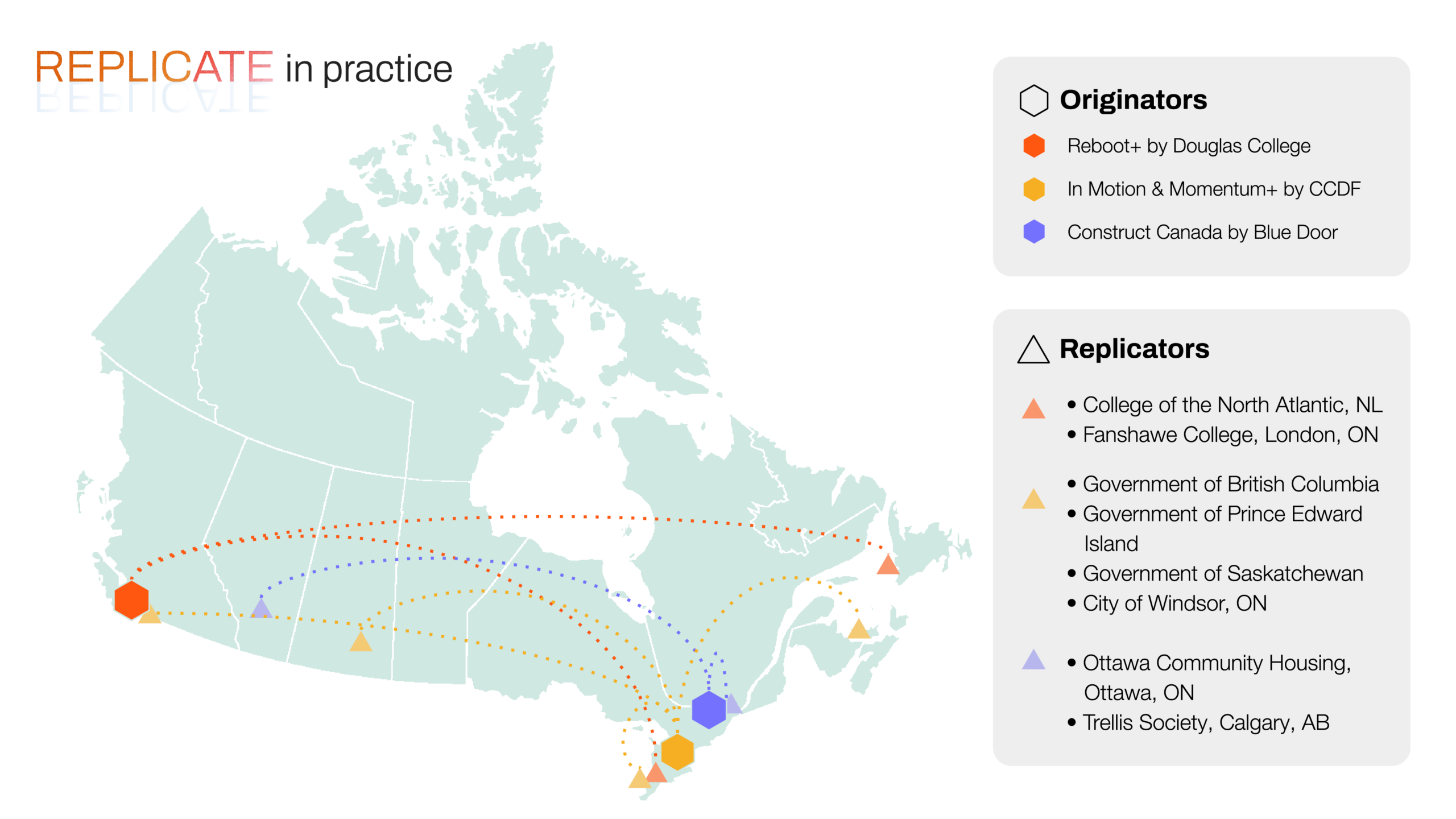
The map on this page shows what Replicate looks like in practice. Three proven originator programs—Reboot+, In Motion & Momentum+, and Construct—are working with eight replication partners to deliver programs on a national level.
Reboot+, successful in British Columbia, is now being replicated in Newfoundland and Ontario. It helps youth facing barriers to education and employment explore careers and post-secondary pathways. In Motion & Momentum+ (IM&M+) is a pre-employability program that supports job seekers with complex barriers, addressing their foundational needs before they head into work or training. Through Replicate, IM&M+ is working with provincial and municipal governments to expand its regional footprint across the country.
Making more wheels
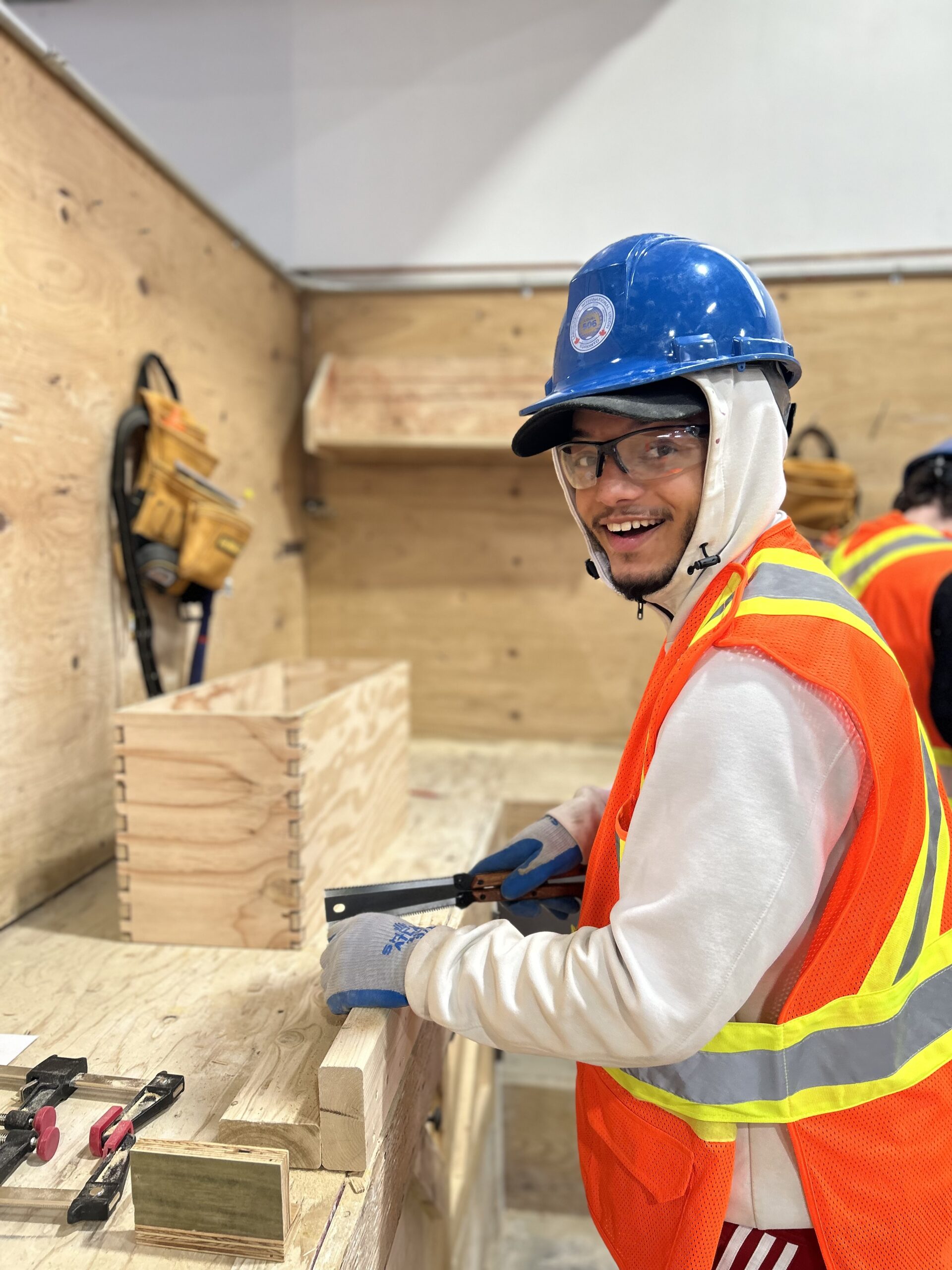
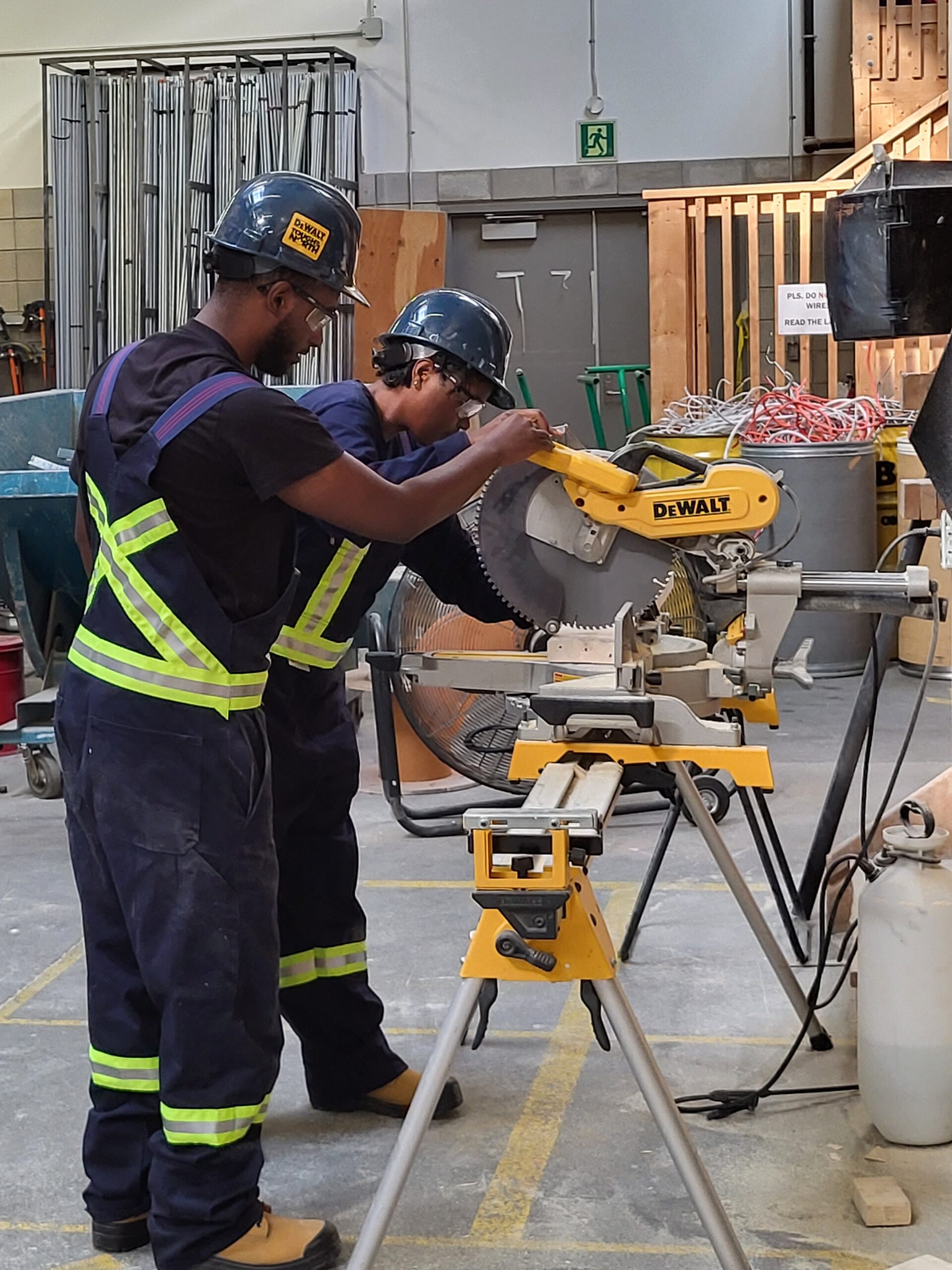
Construct Canada was developed by Blue Door in Ontario and is being replicated at the Trellis Society in Calgary and the Ottawa Community Housing (OCH) Foundation. The rapid skilled-trades training model addresses intersecting challenges, including construction-sector skilled-labour shortages, housing instability, and limited access to training. It includes hands-on learning, employment readiness, employer connections, and wraparound supports.
Since Construct’s launch in 2020, it has had over 1,000 participants and an 88 per cent graduation rate, with 75 per cent of graduates employed within six months.
“It can be scary to jump into a new project with all its unknowns, but we had these mentors and leaders behind us, encouraging us and answering our questions,” says Traci Spour-Lafrance, Executive Director of the OCH Foundation.
The OCH Foundation has run four cohorts of its adaptation of Construct, which it calls Build Your Path.
Without replication, Canada risks staying a nation of pilot projects that don’t scale. With a framework like Replicate, in contrast, we can move beyond isolated experimentation and “make more wheels.” This means getting successful interventions into new contexts, faster; incentivizing adoption; and building a robust skills ecosystem with the infrastructure to support agile workforce training during a time of rapid disruption. By replicating what works, Canada can build the economic resilience we need, and choose the future we want.
Visit fsc-ccf.ca to learn more.
