Innovating Canada


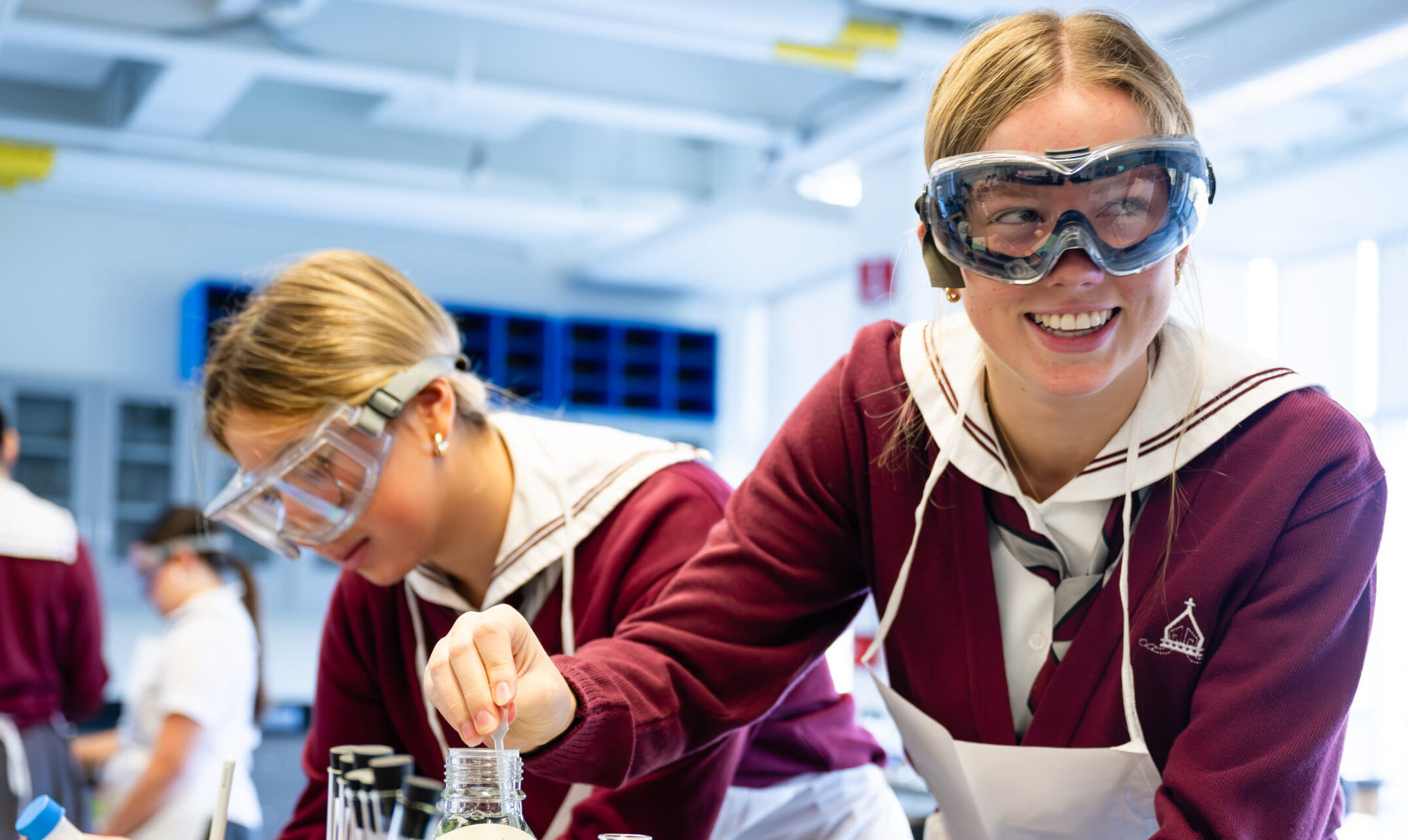
Authentic experiences. Real experts. Serious fun. This STEM club is breaking barriers for girls and gender-diverse youth.
Science, Technology, Trades, Engineering, and Math (STEM) occupations are among the highest-paid and fastest growing in the country, yet women make up only 23% of science and technology workers and less than 5% of trades workers in Canada.
Gender-based barriers start early: children are inundated with stereotypes that can shape their perceptions of STEM professionals, their interests, and their exposure to STEM.
Stereotypes can also affect how adults perceive and treat children, with girls perceived as less competent in STEM than boys, and provided with less scientific information than boys.
But, there’s good news: there are evidence-based ways to break these barriers for girls and gender-diverse youth.
Serious STEM, Serious Fun!
The Canadian Association for Girls in Science (CAGIS) is Canada’s largest and longest-running STEM club for girls and gender-diverse youth ages 7-17.
It was so cool to be able to grow crystals with a chemist, and extract DNA at home with a geneticist.
This multiple-award-winning club, founded in 1992, breaks barriers for girls and gender-diverse youth in STEM with online programming and in-person local clubs that visit real labs, workshops, and field sites to meet mentors and do fun, hands-on activities.
At events, members can try on a STEM career for an afternoon: building and testing bridges in a wind tunnel with an engineer, catching fish and monitoring ecosystems with a freshwater biologist, or building a brick wall with a stonemason!

Meet Karah
This approach is highly successful: in followup surveys of CAGIS alumni, 94% of respondents were studying or working in STEM fields! Many even discovered their career paths at events!
Karah is among them. She joined the organization in elementary school, and attended dozens of in-person events.
In high school, she became involved in the virtual program, attending hands-on online sessions on Saturdays, each featuring an activity led by a STEM expert.
“It was so cool to be able to grow crystals with a chemist, and extract DNA at home with a geneticist,” Karah recalls.
Looking back at all her experiences, there was one that really stood out for her.
“Going to an aerospace event got me interested in the physics behind how planes fly, and I think that really propelled me to go into math and physical sciences.”
Lasting Impact
Karah’s experiences in CAGIS inspired her to take mathematics at the University of Toronto. She’s still in touch with many of the friends she made over her years as a member. She also started volunteering and leading sessions herself as a STEM expert!
I think that CAGIS has really given us the confidence to go into many different fields in STEM.
Karah’s younger sisters also regularly attend events. Jenna, 16, is even a Teen Ambassador for the organization.
“I think that CAGIS has really given us the confidence to go into many different fields in STEM,” Karah says.
Giving youth fun, hands-on experiences can expose them to the endless possibilities for their futures, and build a more inclusive future in STEM.
Sources
- Statistics Canada. (2023, January 6). Table 14-10-0335-02: Proportion of women and men employed in occupations, annual (inactive) [Data table]. Government of Canada. https://doi.org/10.25318/1410033501-eng
- Cheryan, S., Plaut, V. C., Handron, C., & Hudson, L. (2013). The stereotypical computer scientist: Gendered media representations as a barrier to inclusion for women. Sex roles, 69(1), 58-71.
- Miller, D. I., Nolla, K. M., Eagly, A. H., & Uttal, D. H. (2018). The development of children’s gender‐science stereotypes: A meta‐analysis of 5 decades of US Draw‐a‐Scientist studies. Child development, 89(6), 1943-1955.
- Tan, A. L., Jocz, J. A., & Zhai, J. (2017). Spiderman and science: How students’ perceptions of scientists are shaped by popular media. Public Understanding of Science, 26(5), 520-530.
- Master, A., Meltzoff, A. N., & Cheryan, S. (2021). Gender stereotypes about interests start early and cause gender disparities in computer science and engineering. Proceedings of the National Academy of Sciences, 118(48), e2100030118.
- Alexander, J. M., Johnson, K. E., & Kelley, K. (2012). Longitudinal analysis of the relations between opportunities to learn about science and the development of interests related to science. Science Education, 96(5), 763-786.
- Newall, C., Gonsalkorale, K., Walker, E., Forbes, G. A., Highfield, K., & Sweller, N. (2018). Science education: Adult biases because of the child’s gender and gender stereotypicality. Contemporary Educational Psychology, 55, 30-41.
- Holder, K., & Kessels, U. (2017). Gender and ethnic stereotypes in student teachers’ judgments: A new look from a shifting standards perspective. Social psychology of education, 20(3), 471-490.
Visit GirlsInScience.ca to learn more, register a child or teen, volunteer, or donate.