

Sheldon Anderson
Dean of the Centre for Trades and Technologies, Lethbridge Polytechnic
Finding enough skilled labour with the right technical training is a major industry pain point. Here’s how Lethbridge Polytechnic is addressing it.
As industry needs evolve and demand for certain skilled labour grows, Canadian companies are turning to the trade and technical schools for help. “Our industry and community partners tell us that their main challenges are finding the right people to fill the jobs and getting them through the technical training fast enough,” says Sheldon Anderson, dean of the Centre for Trades and Technologies, Lethbridge Polytechnic.
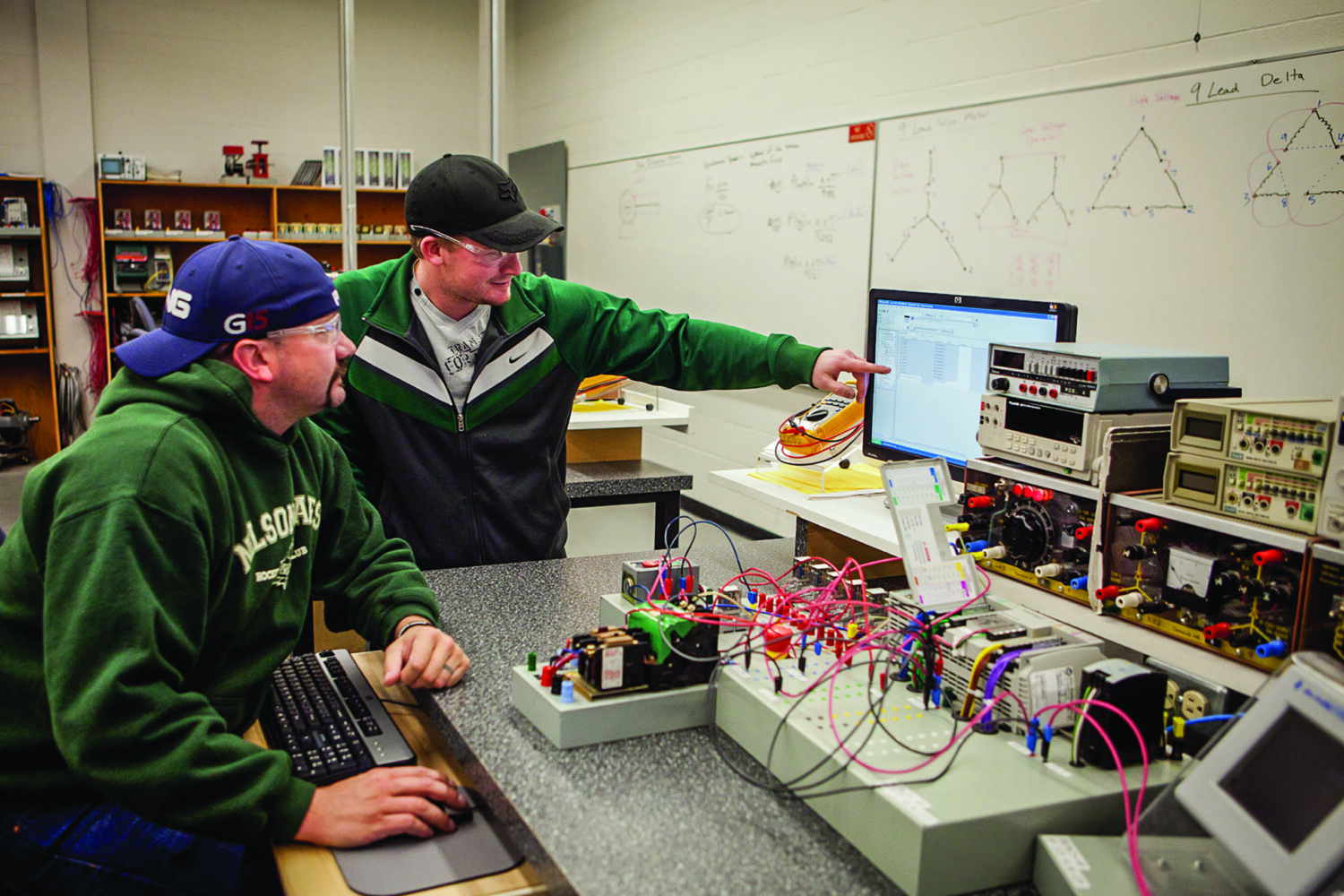
Located in Lethbridge, Alta., Lethbridge Polytechnic offers certificates, diplomas, and degrees, in addition to work-integrated learning through apprenticeships and opportunities to engage in applied research that solves real-world challenges. In response to the current skills shortage, the polytechnic is developing new programs that reflect both current workforce demands and future skills requirements.

Meeting workforce demand
To meet local demand, Lethbridge Polytechnic is developing three additional apprenticeship programs to launch (pending government approval) in the fall of 2027—industrial mechanic, sheet metal worker and refrigeration and air conditioning mechanic. “We’re also exploring new programs in data analytics and AI implementations, as well as in mechatronics and manufacturing processes,” says Anderson.
Industry engagement is a key part of Lethbridge Polytechnic’s curriculum development process. “We’re constantly meeting with industry to understand their needs and do our best to develop programs that meet these needs in a timely manner,” says Anderson. Any new curriculum changes are closely monitored by the polytechnic’s program advisory committees, who review the programs annually to ensure they are staying current. “We also work with other post-secondary institutions to confirm we’re instructing on the latest equipment and industry innovations,” he says. Courses are also taught by instructors with extensive industry experience.
In addition to course instruction, the polytechnic’s focus on applied research provides students with opportunities to solve real-world industry challenges. “This is a key differentiator for us,” says Anderson. “If a company or community partner doesn’t know what they need or how to get to where they want to go, we’ll either do the research to help them find out or work with them as research partners. As a result, we’ve been steadily improving our ranking among Canada’s top research colleges and ranked ninth in 2025,” he says.
State-of-the-art learning spaces
Among Lethbridge Polytechnic’s unique facilities is its Spatial Technologies Applied Research and Training (START) Centre which offers opportunities for students doing research in augmented reality (AR) and virtual reality (VR). “We’re also meeting unique programming demands, and our wind turbine technician program is a great example,” says Anderson. “We’re the only Canadian polytechnic with a full-sized turbine for students to work on, and we have the longest-running wind program in Canada. We were early adopters and we’ll continue to be early adopters to meet the evolving needs of industry,” he says.
With the pace of innovation and change increasing exponentially, so are the ways in which technology is applied to the trades. By staying in tune with industry and community partner needs, Lethbridge Polytechnic is helping to meet current demand while ensuring future workforce readiness.
For more information, visit lethpolytech.ca.
