Innovating Canada
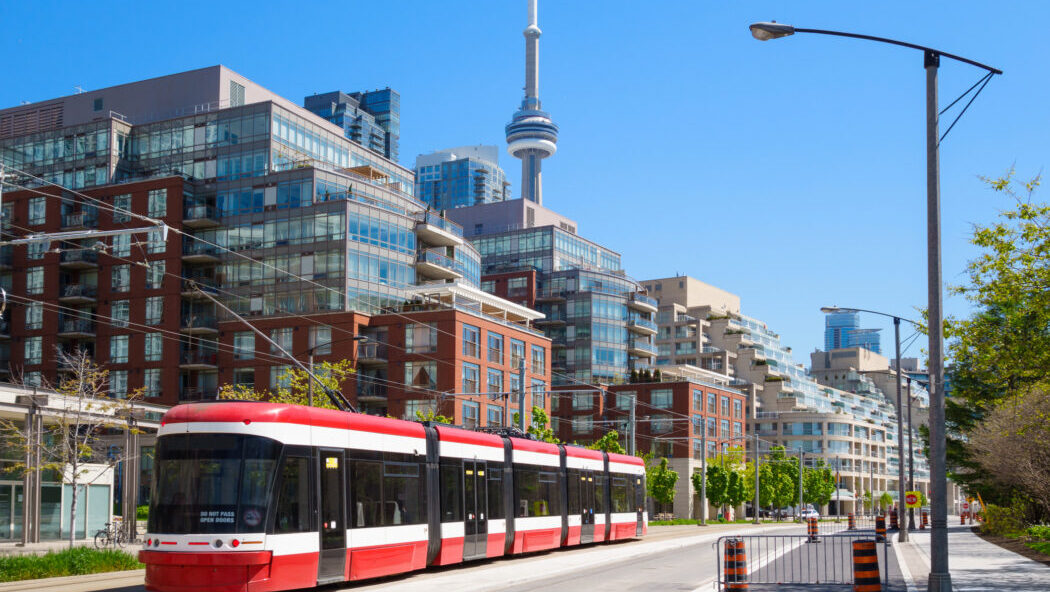


Urban transportation is one of the biggest issues facing Canadian cities, affecting how they function and the quality of life for residents.
As urban regions continue to grow and compete globally, transportation systems play a critical role in connecting people, supporting economic development, and creating vibrant, livable communities. Solving our most-pressing transportation challenges comes from supporting innovative research.
The University of Toronto Transportation Research Institute (UTTRI) is a global leader, delivering data-driven research that is helping to improve transportation planning, reduce traffic congestion, inform government policy, and prepare cities for emerging transportation technologies.
Turning ideas into solutions
UTTRI has a long track record of working directly with public sector partners, including Ontario’s Ministry of Transportation and the City of Toronto. A unique feature is that its work includes all modes of urban transportation. On the supply side, UTTRI develops novel tools for managing traffic systems, public transit, and freight and logistics. On the demand side, UTTRI researchers focus on developing advanced behavioural models to better understand how people make mobility decisions at the personal and household levels.
“The work of the Institute is critical because the transportation sector has an immense impact on the economy, environment and society as a whole,” says Amer Shalaby, the Institute’s Director. “Our aim at UTTRI is to help cities design transportation systems that can improve urban mobility and foster economic growth, while minimizing environmental and other societal impacts.”
Keeping people and goods flowing
The institute’s focus on applied research is generating new knowledge and real-world solutions, including landmark initiatives, such as eMARLINx. This cutting-edge AI-powered traffic signal control system is smart enough to decide in real-time how much green time to give an intersection approach based on detected traffic flow levels. The AI agent continuously learns to optimize the splitting of time at an intersection, and the system is now being piloted by the City of Toronto.
Another ground-breaking project is the GTAModel, a comprehensive activity-based model that synthesizes how people make decisions about where to live, how many cars to buy, where to engage in shopping and other social activities, and the types of transportation they use. “It’s a model used for testing what if scenarios,” says Shalaby, and is currently being used by different transportation agencies in the Greater Toronto Area, Montreal and Halifax to inform transportation planning decisions and policies and assist with evolving the transportation network effectively. Investments in transportation research not only contribute positively to our cities, but they also develop innovative thinkers and the workforce of tomorrow. The institute supports a dynamic Master’s and PhD community, alongside a one-of-a-kind undergraduate transportation systems specialization within the University of Toronto’s Engineering Science program. “We offer advanced courses in transport systems analysis and modeling and we provide our students with opportunities to get hands-on experience working with industry partners,” says Shalaby. “It’s our mission to drive transportation innovation through cutting‑edge research, open doors for emerging talent, and help generate solutions to some of society’s most urgent challenges.”
Work with UTTRI, to tap into its innovation hub of professors, postdoctoral fellows, and graduate students doing creative work in mobility planning and management. Learn more at uttri.utoronto.ca.