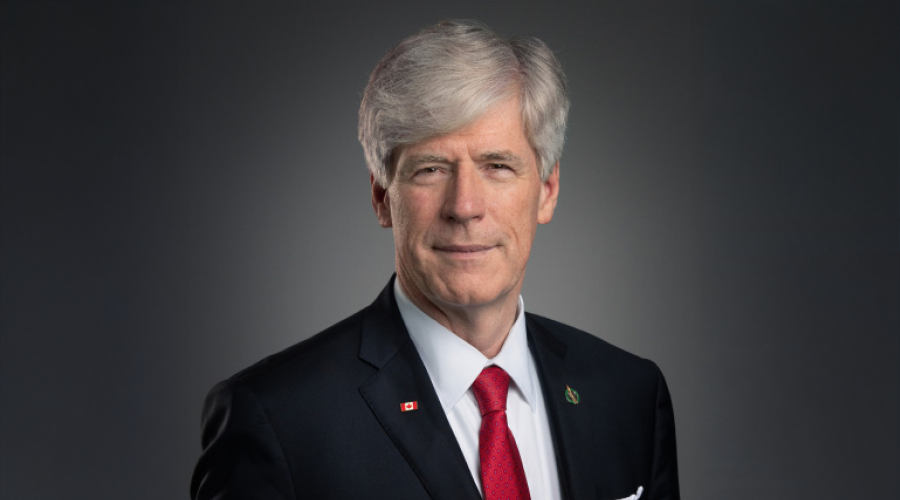
The Honourable Tim Hodgson, Minister of Energy and Natural Resources, shares how the federal government is expanding clean power, supporting workers, strengthening traditional energy sectors, and accelerating innovation — ensuring Canadians have dependable, affordable energy while seizing new global opportunities.

What is the federal government’s core vision for Canada’s energy transition, and how do you see our energy landscape evolving over the next decade?
If we want to be successful in getting to net-zero by 2050 while remaining competitive on a global scale and meeting the increased demand for energy, we have to both responsibly extract and manage our conventional energy resources, while building our clean energy prospects. The world economy is undergoing a historic transformation towards low-carbon energy and clean technology. To compete internationally, Canada will need to reduce its carbon intensity to meet the growing demand from global markets for products with low associated greenhouse gas emissions. Buyers of Canada’s resources are increasingly looking for low-carbon sourcing.
Fortunately, Canada is well positioned to take advantage of these new growth opportunities. For example, our electricity grid, one of the cleanest in the world, guarantees access to the clean power businesses around the world are looking for, in sectors ranging from aluminum to steel to AI. In conventional energy too, Canada is one of very few large-scale suppliers committed to strong environmental, social, and governance standards, and we have reduced the emission intensity of overall oil production by 8 per cent, and the emission intensity of oil sands operations by almost 40 per cent between 1990 and 2022.
Canada’s natural resources, workforce, and commitment to fighting climate change position us to surpass economies that fail to adapt. We will build new infrastructure and capitalise on projects that further Canada’s standing as a clean energy superpower. We will explore initiatives such as nuclear energy, electricity grid interties, and investments in low-carbon fuels such as hydrogen, renewable energy projects, high-speed rail, and critical mineral development. Our investments in clean growth technologies will propel Canada’s competitive advantage. For example, the Darlington New Nuclear Project will support the construction of small nuclear reactors, while LNG Canada Phase 2 will supply cleaner energy compared to other LNG facilities worldwide. We will continue to prioritise clean growth and climate objectives as new projects are considered.
By becoming a global leader in clean technology and clean energy, Canada can strengthen its competitive advantage and expand its exports, particularly in sectors where low-carbon solutions are increasingly seen as a requirement rather than a bonus.
How will Canada balance the need for affordable and reliable energy while accelerating toward net-zero by 2050?
Climate action is not only a moral obligation, it is an economic necessity. Canada’s plan to reach net-zero by 2050 is built on a simple idea: we can cut emissions while building a stronger, more competitive economy. Through the government’s new Climate Competitiveness Strategy, we have a plan to make the investments and set the conditions to get to net-zero by 2050, and build a stronger, cleaner Canada.
As the global demand for energy increases, we need to ensure that Canadians have access to clean, reliable, power sources. A big part of our work will be to continue building an affordable, reliable, net-zero electricity grid, which is why we’re investing in new generation, transmission, and stronger interprovincial connections so clean, affordable power can get to communities across this country. That’s why we announced a new Clean Electricity Investment Tax credit to support these efforts. This government is also focussed on developing our nuclear capabilities to provide clean power to millions of Canadians. The Darlington Nuclear Project will make Canada the first G7 country to have an operational small modular reactor, building on our decades-long nuclear energy leadership to accelerate the commercialization of a key technology that would support Canadian and global clean energy needs.
Canada advances toward a cleaner and more innovative energy future, what opportunities do you see emerging for the next generation of talent, and how is the federal government supporting skills development and career growth within the energy and resource sectors?
Canadian skilled trades workers are the backbone of our economy. Without their hard work and dedication, our forestry, steel, and energy sectors–to name a few–would cease to exist, and in this time of trade disruption, these workers need and deserve their government’s support.That’s why we have announced a wide variety of supports for Canadian workers over the last several months. For example, via the tariff support package that was announced back in August, the federal government is providing $50 million for worker retraining and community support, delivered by Employment and Social Development Canada through Labour Market Development Agreements.
Moreover, we also made a new commitment to support union-based apprenticeship training in Red Seal Trades. What this means is stronger and more supporting training and innovation programs, to ensure that Canadian unionized workers have more opportunities for work – and with Canada getting back into the business of building, we are going to need all the skilled workers we can get!
