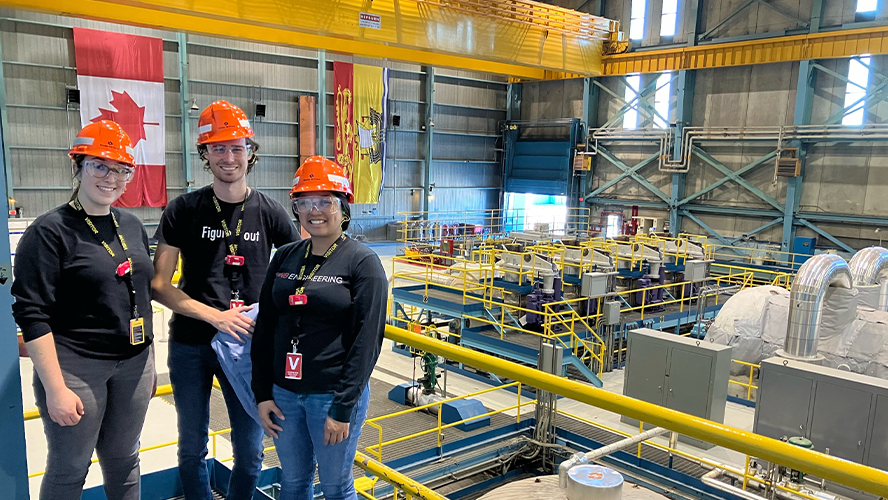


Dr. Olga Palazhchenko
Associate Professor, Centre for Nuclear Energy Research, UNB

Dr. Dhirendra Shukla
Chair, J Herbert Smith Centre for TME (Technology Management & Entrepreneurship)
From advanced nuclear research to clean-tech startups, UNB is training the leaders who will power Canada’s energy transition.
Canada is entering the most significant energy transition in its history. As the country moves toward a more electrified, decarbonized and digitally connected economy, our future prosperity will depend on abundant, reliable and secure energy. Meeting this demand will require new thinking, new technologies and a new generation of skilled professionals who can build and protect a diverse energy system.
The University of New Brunswick (UNB) plays a critical role in shaping a sustainable future. As the only university east of Ontario to offer a nuclear program option, UNB is a national leader in conventional nuclear technology, renewable energy, small and advanced modular reactors and energy-security research. Its startup incubators also drive energy innovation.
Across our campuses, students, faculty and partners are driving solutions that strengthen our energy future. The stories that follow show how UNB is cultivating talent, supporting innovation, advancing research and building industry partnerships that are shaping Canada’s energy landscape.
Driving nuclear innovation through experiential learning and research
Over the next six years, UNB will play a leading role training up to 60 next-generation experts in nuclear science and engineering through a new multidisciplinary grant program led by Dr. Olga Palazhchenko, P. Eng., associate professor at the university’s Centre for Nuclear Energy Research.
By connecting researchers, educators, industry and government organizations across Canada, Canada’s Life Cycle for Existing and Advanced Nuclear (CLEAN) —a collaboration between five post-secondary institutions across the country—will teach beyond the fundamentals of nuclear engineering. Students will receive training in cybersecurity, advanced manufacturing, chemistry and corrosion of nuclear systems and materials, and other areas critical to the industry’s continued success.
Learners completing CLEAN achieve an experience beyond a typical undergraduate or graduate degree, obtaining key technical and professional workforce readiness skills needed to meet the urgent demand for a skilled nuclear workforce.
Dr. Olga Palazhchenko
Associate Professor, Centre for Nuclear Energy Research, UNB
Through new workshops, Canada-wide research lab exchanges, and industry-driven internships, the program will provide graduates with the technical and professional expertise needed to meet the country’s urgent demand for a skilled nuclear workforce.
Funded by a $1.65 million Collaborative Research and Training Experience grant from the Natural Sciences and Engineering Research Council, Palazhchenko developed CLEAN with a diverse group of passionate researchers from the University of Calgary, University of Regina, McMaster University and the Royal Military College of Canada. Its collaborators include experts from organizations across the country, including the Canadian Nuclear Safety Commission, Canadian Nuclear Laboratories, Canada’s Nuclear Waste Management Organization, UNB’s J Herbert Smith Centre, and nearly a dozen others.
How UNB’s startup engine accelerates energy innovation
UNB’s J Herbert Smith Centre (JHSC) has a winning formula: find technical graduates with good ideas, teach them business fundamentals, and connect them to capital and customers so Canada’s next wave of energy innovators and tech leaders can shape the world of tomorrow.
For 37 years, the JHSC has quietly built one of Atlantic Canada’s most successful startup incubators, supporting more than 290 predominantly student-founded ventures that have raised over $122 million. Led by Dr. Dhirendra Shukla, P. Eng., since 2009, the centre has been positioned as a hub of green energy innovation thanks to his blend of expertise in technology and investment.
Our goal has always been to turn technical expertise into entrepreneurial momentum. Every year, master of technology management and entrepreneurship (MTME) graduates leave with the confidence and capability to either build companies that matter or take on influential tech leadership roles. That perspective is what helps them develop solutions that push Canada’s energy transition forward.
Dr. Dhirendra Shukla
Chair, J Herbert Smith Centre for TME (Technology Management & Entrepreneurship)
Two of the centre’s recent master of technology management and entrepreneurship (MTME) graduates further position Atlantic Canada as leaders in the energy transition.
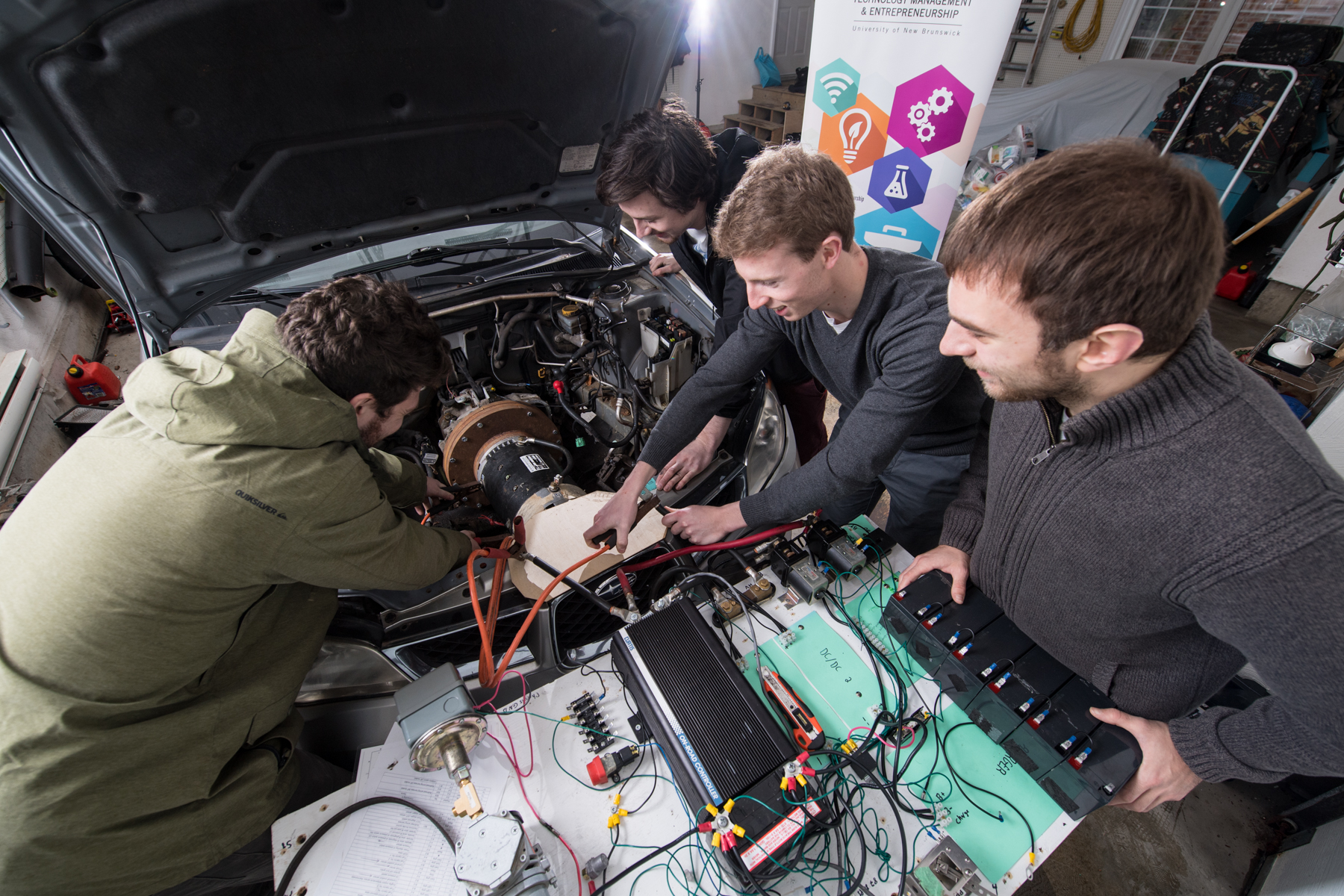
In 2017, engineer Sam Poirier, P. Eng., entered the program intending to build an off-road electric vehicle. After testing his market assumptions, he discovered the real opportunity was in vehicle control software. Poirier’s company, Potential Motors, pivoted to develop systems for unpredictable terrain and has since attracted about $14 million in venture capital. This software has helped set the standard for high-performing electric off-road vehicles.

Another MTME graduate applied the same entrepreneurial drive to energy storage.
Daniel Larsen, P. Eng., co-founded Stash Energy, which developed thermal storage systems that work with residential heat pumps, essentially turning homes into batteries. By storing heat when electricity is cheap and releasing it during peak demand, Stash helps utilities reduce grid stress while lowering consumer costs.
Programs like MTME target engineers and scientists who want to bring transformative ideas to life. Through its intensive one-year program, students do just that while learning about market validation, fundraising, business leadership, and working with mentors, investors and industry partners.
As Canada moves towards a greener future, UNB is equipping our workforce with the talent and expertise needed to accelerate innovation and help build the energy systems our country needs for a sustainable future.
Discover how UNB’s programs, research and partnerships are shaping future leaders at UNB.ca.
