


Nick Betts
Executive Director of CANZA
The Canadian Alliance for Net-Zero Agri-food (CANZA) is working collaboratively with industry leaders to advance a more sustainable, resilient agri-food system in Canada.
Canadians from coast to coast to coast rely on the food that our farmers grow, from grains and oilseeds to meat and dairy. The agri-food system is also a significant contributor to Canada’s economy. In 2024, the agriculture and agri-food system employed 2.3 million people in Canada, providing one in nine jobs, and contributed over $149 billion to Canada’s GDP.

Challenges abound for Canada’s farmers, however. One major concern is climate change, with climate volatility putting our agricultural resilience to the test. Droughts, floods, and erosion are all pervasive threats that put the future of Canadian farms and crops in jeopardy.
Climate-smart, resilient farming is more essential today than it has ever been before, and one organization is on a mission to amplify producers’ efforts.
CANZA is uniting Canada’s agri-food sector to drive change
CANZA unites farmers, researchers, companies, and organizations that share a commitment to accelerating climate action in Canadian agriculture. Under its leadership, members — whether they’re shaping policy, producing food, or providing inputs — can come together to build a more resilient food future.
“CANZA was created to do more than just talk about ideas. We’re here to catalyze change, to get boots on the ground, and to put practical solutions into action,” says Nick Betts, Executive Director of CANZA.
By joining the alliance, partners can play an active role in building a Canadian agri-food sector that’s productive, secure, and competitive, and that benefits farmers, communities, and the environment alike.
The Million Acre Challenge
CANZA’s Million Acre Challenge, currently underway, was created with farmers, for farmers. It provides cost-share support, agronomic capacity, and measurement tools to help farmers adopt climate-smart practices, all while recognizing and rewarding the environmental benefits their work creates across the value chain. Across the country, the private-sector is increasingly stepping up because supporting on-farm environmental improvements strengthens supply chains, reduces risk, and helps meet their environmental commitments. It’s a smart, long term investment. And, it accelerates change faster than public funding alone.
Farmers Leading the Way: Morning Glory Stream Farming
Morning Glory Stream Farming is a fourth-generation family farm in Oxford County, Ontario, growing grains and oilseeds, raising a small cattle herd, and running a research farm that tests new practices. Decades ago, after a heavy rainfall washed away truckloads of soil, John Gal shifted the farm toward low-till, a move that remains foundational today. With his wife Karen and their two daughters, Andrea and Jessica, the family continues to use low-till, cover crops, winter grazing, and strategic fertilizer application to protect soil and improve resiliency, even in unpredictable weather.
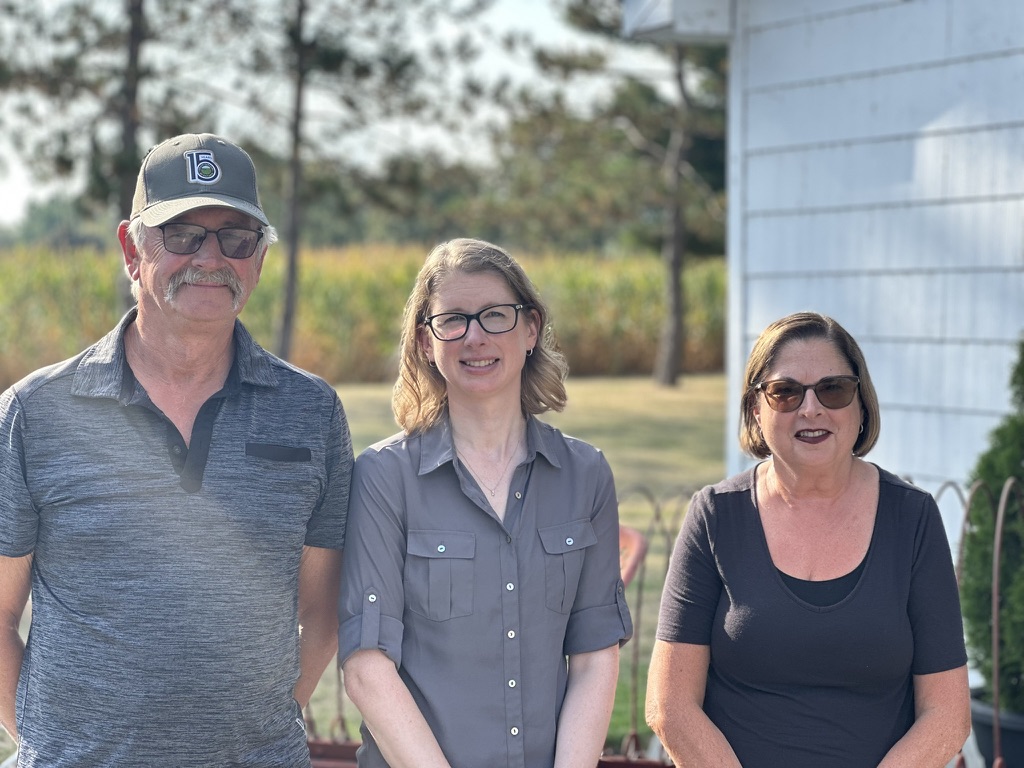
As agribusiness operators, the Gals also test and share practices through their research farm and fertilizer dealership. “We’re facing such volatility and unpredictability in our weather. By minimizing tillage, extending our crop rotation, and cover cropping, we are increasing the resiliency of our farm,” says Andrea Gal.
Farming isn’t like other businesses. You can’t “fail fast, fail often”, each growing season is precious, and risk is high. By starting small, testing, measuring, and adapting over time, the Gals are showing how climate-smart practices take root and how farmer leadership drives change across communities.
“Built with Canadian farmers, the Million Acre Challenge is rooted in real-world conditions,” says Betts. “Our goal is to accelerate practice adoption that’s both economically viable and environmentally sustainable — practices that strengthen Canada’s agri-food system and make it more resilient, more secure, and more investable.”
Beyond the Million Acre Challenge, CANZA is also working to develop a standardized way to measure, monitor, report, and verify (MMRV) the sustainability initiatives farms are adopting. This type of framework will help to advance Canada’s agri-food system and encourage continuous progress. “I encourage you to learn more, get involved, and help us seize this opportunity,” says Betts. “Together, we can make Canadian agriculture a model for the world.”
Join CANZA in advancing a more resilient food future for Canadian agriculture at canza.ca.
