

Scott Balfour
President & CEO, Emera Inc.
Canada faces unprecedented electricity demand growth. It will take an innovative electricity grid — built in innovative ways — to meet this nation-building opportunity.
Canada is at a pivotal moment. Rising demand for electricity and geopolitical uncertainty are creating both urgency and opportunity to strengthen our country’s energy security, sovereignty, and resilience.
The recently released National Strategy for an Electrified Canadian Economy reports that electricity demand could double by 2050, driven by transportation, industry, buildings, and data growth. Meeting future demand will require over $1 trillion in investment in generation, transmission, and grid modernization.
This is a massive build out on an accelerated timeline. These major infrastructure projects will need to align governments, utilities, Indigenous partners, capital markets, communities, and customers to integrate and deliver new sources of renewable generation across the country.
The good news is we know how to do this. Canada starts from a position of strength: abundant energy resources, one of the cleanest electricity systems in the world, and proven expertise delivering complex infrastructure.
To deliver exponentially better infrastructure, we need to build differently.
With advanced technology, stronger partnership models, and tailored financing approaches designed for long-life assets, Canada can deliver the national-scale projects this moment demands.
A smarter grid
Canada’s power grids were built to serve local needs, shaped by geography, available resources, and patterns of demand. That system has served Canada well. But today’s fragmented grid design and aging technology won’t be able to meet future demand.
Fortunately, there’s modern technology already at work that enables the kind of regional interconnection Canada needs, moving electricity to where it’s needed while balancing supply and demand over time and distance. High-voltage direct current (HVDC) systems optimize load and flow to integrate diverse generation sources, stabilize differences between systems, and strengthen grid resilience.
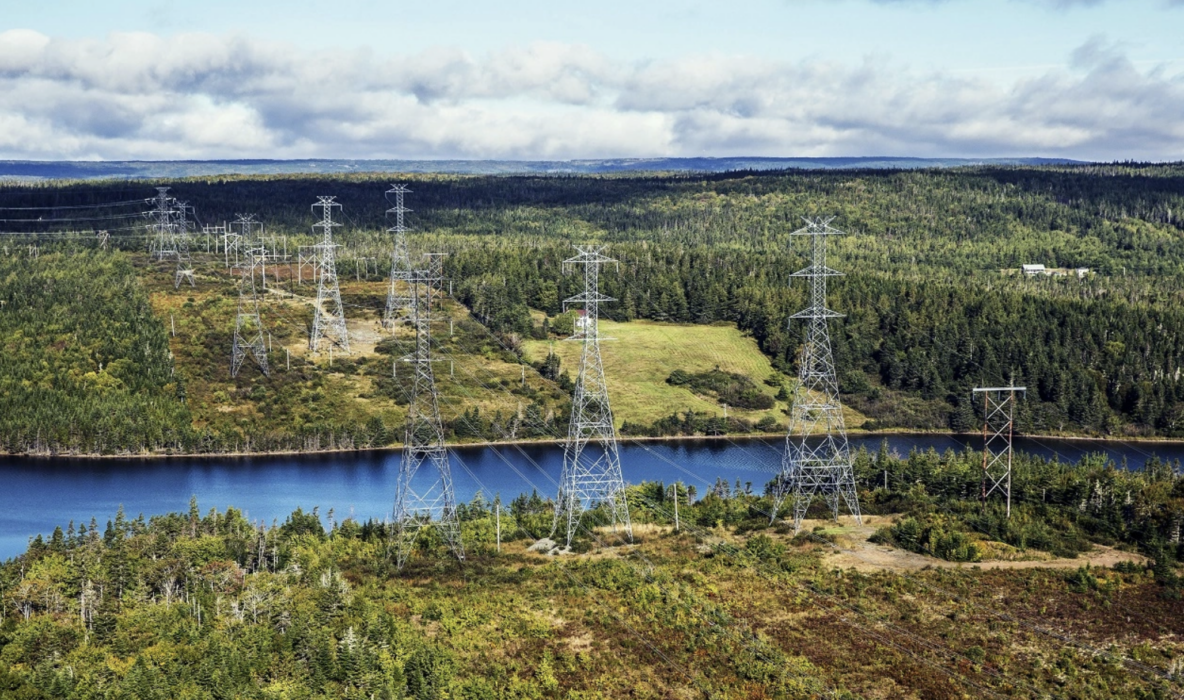
The Maritime Link demonstrates the value of HVDC. This 500 megawatt connection carries hydroelectric power from Newfoundland and Labrador to Nova Scotia under 170 kilometres of open ocean. For Newfoundland and Labrador, it provides a long-term, stable customer for clean hydro from Muskrat Falls, turning a natural advantage into sustained economic value. For Nova Scotia, it delivers about 19 per cent of annual electricity needs as dependable, emissions-free power and is a cornerstone of the province’s clean energy transition.
Transmission isn’t just about moving electrons; it’s about unlocking the value of our national resources to help Canada compete.
It’s what can happen when the right partners come together to connect supply with demand. Similarly, Ontario’s proposed Toronto Third Line would apply HVDC in one of Canada’s most demand-intensive regions, improving reliability while avoiding the need for new corridors through dense urban areas.
New ways to partner
Generational infrastructure projects depend on constructive partnerships across borders, interests, and communities. Without trust, confidence, and support, projects grind to a halt.
Building those relationships starts early and requires sustained effort. Engagement with Indigenous rights holders, suppliers, partners, and customers isn’t a step in the process — it is the process. Projects move faster and are more durable when they’re built with communities, not around them.
Transmission isn’t just about moving electrons; it’s about unlocking the value of our national resources to help Canada compete.
The Maritime Link project team created partnerships and governance structures that were as innovative as its technology. They aligned two provinces around shared economic value, coordinated across governments and utilities, and engaged communities, fishers, environmental experts, rights holders, and stakeholders early to shape how the project was designed, approved, and delivered.
Shared-value financing
The cost and structure of financing the infrastructure build-out the nation needs will determine what gets built and at what cost to customers. With long-life assets, we need models that allocate risk appropriately, attract long-term capital, and balance outcomes for customers and investors. If the model doesn’t work, the project doesn’t move.
Purpose built financing structures better align cost with long-term value. These generational assets are built to deliver benefits for decades and can be financed accordingly. By blending public investment, low cost debt, and long horizon capital, project costs are spread over decades, lowering cost pressure on today’s customers and enabling broader participation.
The Wasoqonatl intertie demonstrates this model in practice. Emera-owned Nova Scotia Power is the lead partner in this transmission line between Nova Scotia and New Brunswick. It includes Mi’kmaw communities in Nova Scotia and Mi’gmag communities in New Brunswick, NB Power, and the Canadian Infrastructure Bank, which provided low-cost debt and its first equity investment. This structure promotes First Nations ownership, creating value over time, while delivering more than $200 million in savings for customers.
Taking shape
Canada faces the challenge of increasing energy demand from a position of real strength: abundant, clean energy resources, safe and regulated systems and structures, and the capacity to deliver complex infrastructure, paired with pride-fuelled ambition to deliver what future Canadians need.
But meeting this moment will take more than ambition. It requires innovation across multiple fronts, including smarter grid technology, stronger partnership models, and tailored financing for generational assets that support long-term affordability.
The task ahead is to align around shared outcomes and build at the scale this moment requires. When we do, Canada will not simply keep pace with the future; we’ll shape it.
Emera Inc. (TSX/NYSE: EMA) is a North American energy company headquartered in Halifax, Nova Scotia. Learn more at emera.com.
