 Innovating Canada
In this issue
-

s Sponsored
Canada’s Path to Responsive Launch and Arctic Security
Satellites underpin modern defence, but Canada depends on foreign launch providers. Responsive launch will strengthen sovereignty, Arctic security, and operational resilience. Satellites underpin modern defence and national resilience. They enable intelligence, surveillance, and reconnaissance, secure communications, navigation and timing, and support operations across vast geographies, particularly in the Arctic. But for Canada, there is a...
-

s Sponsored
How the Global F-35 Program Strengthens Canada’s Defence Industry
Canada’s participation in the global F-35 program strengthens the economy, enhances national security, and advances defence leadership. Canada joined the F-35 Joint Strike Fighter program in 2002. As one of eight original partner nations, Canada contributes to the design, manufacturing, and long-term sustainment of F-35s — 5th Generation fighter jets built by Lockheed Martin and...
-

s Sponsored
Canada’s Defence Readiness Starts with Talent
In an increasingly unpredictable world, Canada’s defence readiness will depend on how effectively it mobilizes talent across government, industry, and academia. As the Government of Canada’s newly released Defence Industrial Strategy (DIS) recognizes, advances in critical technologies are becoming central to national security. While the country has world-class research institutions and highly skilled talent, the challenge...
-

Securing Our Skies in a Changing World
Canada’s airspace is vast, complex and as strategically consequential as any road, rail or port below it. Spanning nearly 18 million square kilometres, it is the second-largest airspace managed by a single provider anywhere in the world. It connects people and communities from coast to coast to coast, supports billions of dollars in trade annually,...
-
s Sponsored
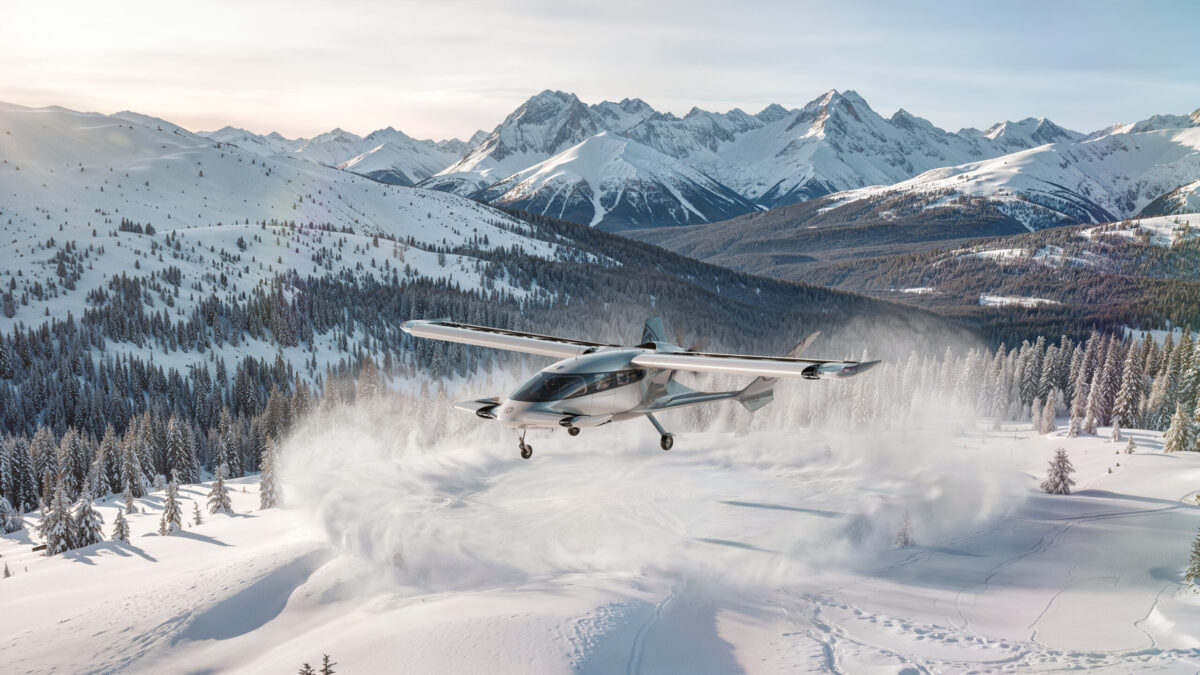
Advanced Air Mobility: A Strategic Opportunity for Canada’s Defence and Sovereignty
Canada’s geography gives it a unique advantage in shaping the future of aviation. With vast land, remote communities, and one of the largest Arctic regions in the world, Canada operates in environments where mobility, logistics, and surveillance demand innovative solutions. These conditions position our country as a natural proving ground for the next generation of aviation technologies, including...
-

Unlocking Canada’s Defence Opportunity
As Canada advances its new Defence Industrial Strategy, the country has a chance to strengthen national security while building a more competitive domestic defence industry. Achieving that vision will require a procurement system that enables Canadian companies to participate, innovate, and scale. Canada is entering a new phase in its defence policy. The federal government’s emerging...
-

s Sponsored
Canadian Talent and Sovereign Technology Are Already Powering Defence Innovation
Canada’s defence future is being shaped today by homegrown talent, sovereign innovation, and industry partnerships delivering capability at speed and scale. The Government is embracing the heightened importance of defence and defence capabilities through its new Defence Industrial Strategy (DIS). Its emphasis on sovereignty, rapid innovation and long-term economic growth aligns with the goals that...
-

s Sponsored
How Canada Is Building Its Very Own Path to Orbit
Canada expands its defence strategy to include sovereign launch capability and Spaceport Nova Scotia is getting ready to launch. The race for space is no longer about exploration but about defence, security, and technological autonomy. As countries increasingly rely on satellite systems to support secure communications, intelligence gathering, surveillance, and missile detection, Canada is positioning itself to strengthen its sovereign access to space as...
-

s Sponsored
Mission Critical: How AI Is Improving National Defence and Security
Artificial intelligence is transforming the defence space, enabling new operational capabilities to protect and defend Canada and Canadians more efficiently and safely. There’s an important concept called technological sovereignty, which refers to a nation’s ability to independently develop and control critical technologies such as AI and data infrastructure for economic prosperity and security. To achieve...
-

s Sponsored
Canada’s Future Defence Advantage Begins with Trusted Communications
The Government of Canada’s Defence Industrial Strategy prioritizes trusted communications as a sovereign capability because they protect coordination, decision-making, and operational resilience. Canada is modernizing its defence capabilities. The federal government’s first-ever Defence Industrial Strategy (DIS), launched in February 2026, sets out a clear vision for a more robust defence industry in Canada. It aims...
