

Joel Houde
Vice President and General Manager, General Dynamics Mission Systems–International
Canada’s defence future is being shaped today by homegrown talent, sovereign innovation, and industry partnerships delivering capability at speed and scale.
The Government is embracing the heightened importance of defence and defence capabilities through its new Defence Industrial Strategy (DIS). Its emphasis on sovereignty, rapid innovation and long-term economic growth aligns with the goals that Canada’s defence industrial base has been delivering against for decades.
To move forward at pace, public and private sectors must stay aligned on objectives. When goals drift out of sync, misalignment slows procurement progress and makes achieving shared outcomes more challenging. Procurement processes exist for good reasons — fairness and accountability — but the pace of technology means we must find ways to get new innovation into the hands of the Canadian Armed Forces (CAF) faster. Industry can innovate and produce capability faster than it can currently be procured. And in cases such as C5ISR, “off-the-shelf” rarely means “ready-to-use” — integration is an essential ingredient to delivering C5ISR capability.
Canada’s systems integrator and C5ISR strategic partner
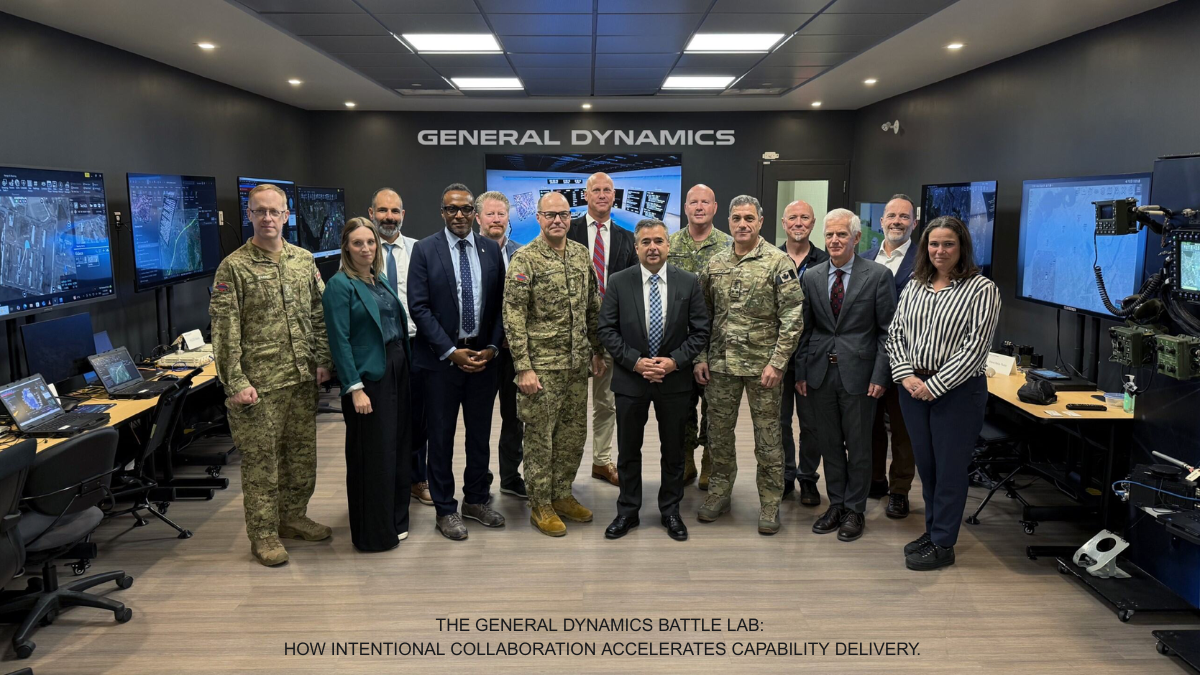
Canada already has the capability to move faster and integrate defence technology in real time. General Dynamics Mission Systems–Canada (GDMS-Canada) are experts in systems integration and have been a C5ISR strategic partner for over 30 years. They provide engineering credibility, operational expertise, and sovereign control while allowing CAF users to test solutions and deliver immediate feedback that drives rapid product improvement, substantially reducing procurement risks.
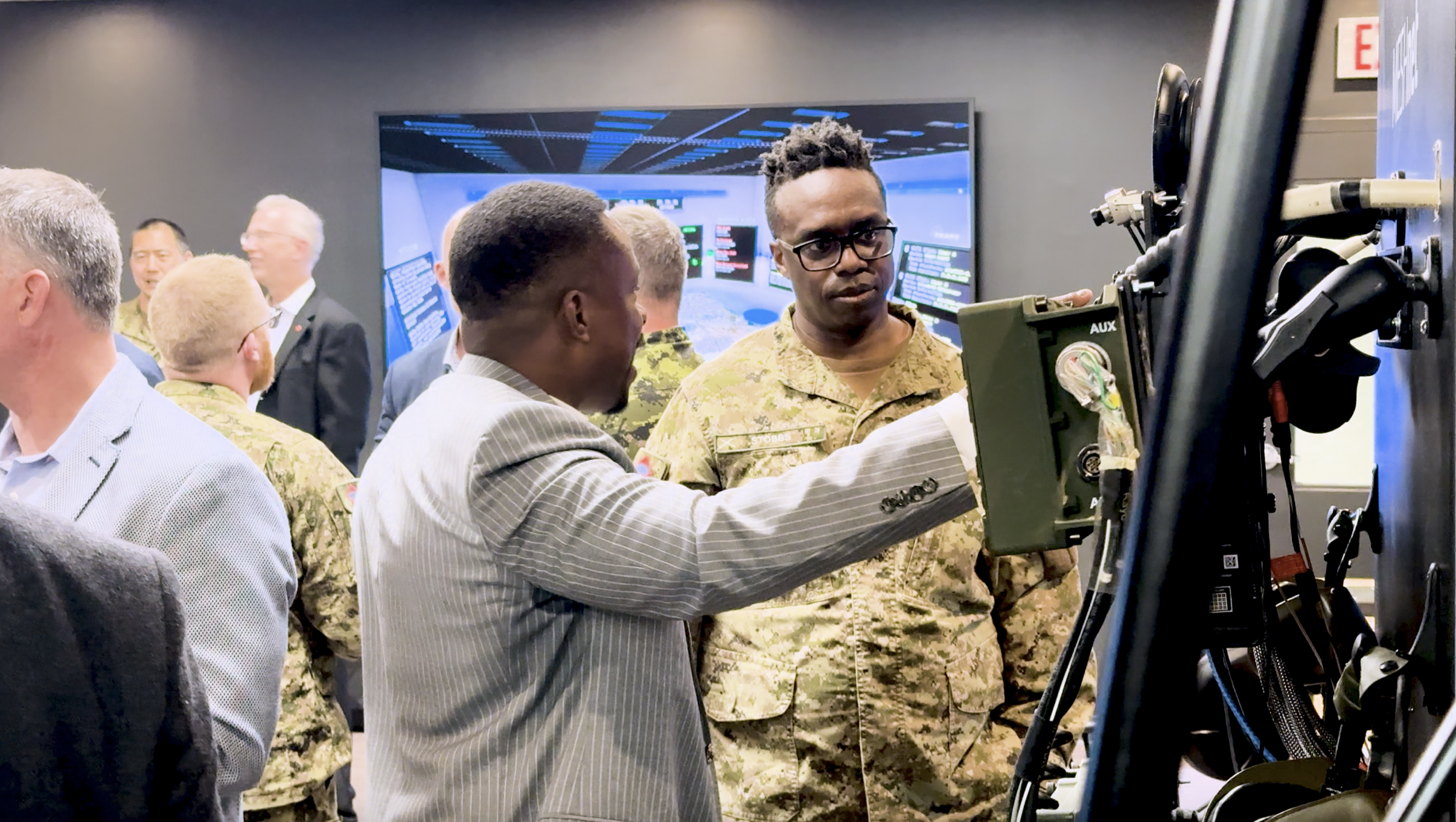
Through initiatives like the GDMS-Canada Battle Lab, SMEs across the supply chain can rapidly develop and insert new technologies into CAF operations at home and abroad. Partnership between government, industry, and soldiers offers the ability to experiment early, contract quickly, and deliver capability in months — not years.
Whilst the DIS supports this model by enabling close collaboration, critical to our collective success will be the implementation of rapid procurement, by leveraging strategic partnerships, allowing innovation led by experienced defence firms, integrating their broad Canadian supply chains.
Industrial capacity: A Canadian success story
Central to the DIS: strengthening sovereign innovation & protecting Canadian intellectual property. Canada has the talent, technology and industrial capacity to deliver. GDMS-Canada has been investing and operating in Canada for close to 80 years. Recently — incentivized by Canada’s Offset policies — more than $5.5 billion in value for Canada’s defence industrial base has been generated while sustaining mission-critical sovereign capabilities for the CAF. Today that capability is embedded across Canada’s military platforms.
Virtually every operational RCAF maritime surveillance aircraft and every operational RCN ship rely on anti-submarine warfare (ASW) technologies they design and build in Halifax, Nova Scotia. GDMS-Canada engineers in Calgary, Alberta and Ottawa, Ontario develop and evolve advanced C5ISR for the Canadian Army. In Sherbrooke, Quebec, engineers build Uncrewed Vehicles (UXVs) and mission systems for defence operations.
Growing Canada’s SME ecosystem
A resilient defence industrial base depends on a strong national supply chain. Between 2018 and 2025, GDMS-Canada contributed more than $3.84 billion in value to Canada’s defence industrial base through programs supporting Land C5ISR capability alone, including over 70 SMEs.
Canadian defence innovation is increasingly contributing to global security through exports and allied partnerships.
They partner with over 250 companies, academia, think tanks and research institutions like DRDC ensuring innovation moves quickly from concept to operational capability.
Increasing export potential
Canadian defence innovation is increasingly contributing to global security through exports and allied partnerships. Canadian-developed and world-renowned ASW systems are now in service with over 15 allies from the Netherlands to Colombia. In Latvia, GDMS-Canada employees — Missions Specialists — work alongside the Canadian Army on Operation REASSURANCE, deploying advanced C5ISR capabilities with the multinational brigade. The company supplies tactical communications and information systems on the ASCOD vehicles, helping NATO forces on the alliance’s eastern flank to operate securely.
This is how Canadian capability developed for the CAF can scale globally.
Enhancing skills training & keeping high-value jobs in Canada
None of this capability exists without highly skilled people. Under fully Canadian leadership, there are over 1,200 GDMS-Canada employees in Ottawa, Calgary, Halifax and Sherbrooke — including over 700 high-value engineering roles — who design, test and produce mission systems used by the CAF and allied militaries worldwide. 400,000 square feet of office, laboratory and manufacturing space enables IP and deep technical expertise to remain in Canada.
Partnerships with universities, co-op programs, and graduate recruitment initiatives help the next generation of Canadian engineers and technicians remain in Canada building careers in defence technology.
Delivering on the Defence Industrial Strategy
The DIS sets an ambitious course for Canada’s security and economic future. What matters now is execution — finding innovative procurement approaches that enable experienced Canadian defence firms to deliver and iterate technologies faster for rapid implementation and deployment. GDMS-Canada is ready to help, having invested billions of dollars in Canada to establish the skills, technologies and infrastructure Canada needs to deliver tomorrow’s technologies today.
To learn more, visit www.gdmissionsystems.ca.
