


Mark Cooper
President & CEO, NAV CANADA
Canada’s airspace is vast, complex and as strategically consequential as any road, rail or port below it. Spanning nearly 18 million square kilometres, it is the second-largest airspace managed by a single provider anywhere in the world. It connects people and communities from coast to coast to coast, supports billions of dollars in trade annually, and enables the emergency response and northern sovereignty missions that are essential to Canada’s functioning as a continental nation. Thousands of flights cross Canadian airspace every day, from densely traveled southern corridors to Arctic routes where air transport is an essential link for remote communities.
That system is not background infrastructure. It is foundational to how Canada works.
A Changing Global and Strategic Environment
The global environment in which that system operates has changed considerably. Rising geopolitical tensions, renewed focus on Arctic sovereignty, supply chain disruptions, and growing domestic demand for resilient connectivity have all elevated its strategic importance.
“Air navigation used to be understood primarily as an enabler of commercial aviation,” says Mark Cooper, President and Chief Executive Officer at NAV CANADA. “It is in fact something broader: dual-use national infrastructure that serves economic, security and sovereign purposes simultaneously. Every day, the same systems guiding a commercial flight also support search and rescue, Arctic resupply, and national defence.”
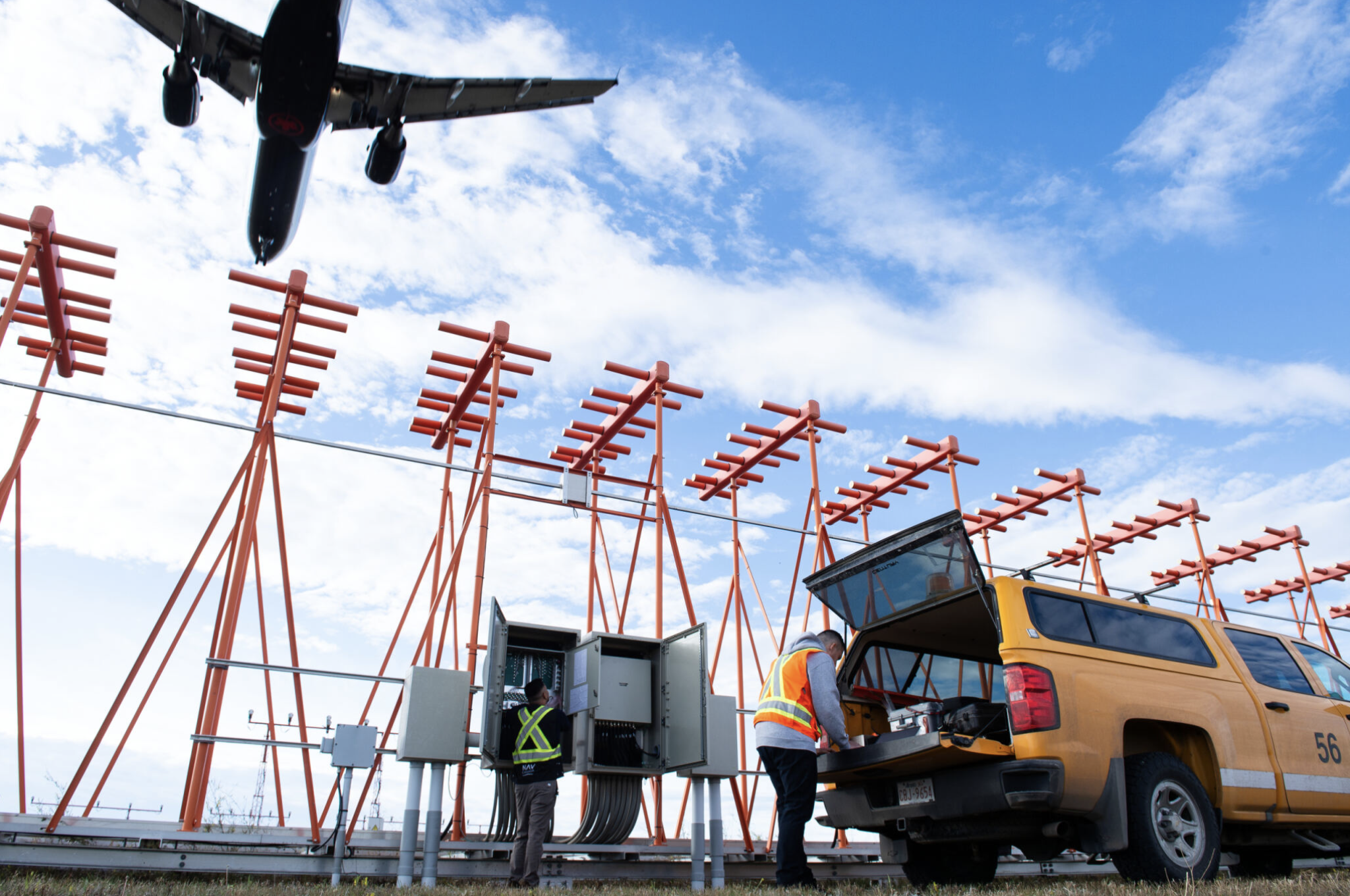
Planning for Growth and Long-Term Demand
Traffic projections underscore the importance of sustained investment. Canadian airspace traffic is expected to increase by roughly 60 per cent by 2050. Meeting that demand safely, while maintaining the resilience and flexibility that security operations require, demands forward-looking investment in the underlying systems and infrastructure.
Canada’s ability to manage its own skies safely and independently benefits from increased partnership. It is a quiet but consequential national asset, serving both economic and national security purposes. More than ever, keeping it strong is a shared responsibility.
Since taking over management of Canada’s civil air navigation system in 1996, NAV CANADA has operated on a not-for-profit, user-pay model that has consistently delivered strong performance while investing over $3.5billion in system renewal and modernization. That model has worked well, delivering consistent value for the aviation system and the Canadians who depend on it.
As Canada invests in supply chain resilience, northern infrastructure and defence readiness, air navigation should be part of that broader policy conversation. Government funding for programs that strengthen national connectivity, Arctic capability, and dual-use infrastructure represents direct investment in Canada’s sovereign capacity.
A Shared Responsibility for Canada’s Skies
For Mr. Cooper, the stakes are clear. “Canada’s ability to manage its own skies safely and independently benefits from increased partnership. It is a quiet but consequential national asset, serving both economic and national security purposes. More than ever, keeping it strong is a shared responsibility.”
NAV CANADA stands ready to deliver in partnership with the federal government. Expanded digital and remote tower capabilities, modernized surveillance and communications systems, strengthened cyber-resilience, and enhanced Arctic weather observation are active priorities, and the foundation for the next generation of Canada’s air navigation system.
Learn more about NAV CANADA’s modernization priorities and national infrastructure role: navcanada.ca
