


David Dong
Marketing Manager, CAAM
Canada’s geography gives it a unique advantage in shaping the future of aviation. With vast land, remote communities, and one of the largest Arctic regions in the world, Canada operates in environments where mobility, logistics, and surveillance demand innovative solutions. These conditions position our country as a natural proving ground for the next generation of aviation technologies, including advanced air mobility.
Advanced air mobility (AAM) is the next evolution of air transportation. Enabled by an ecosystem of new propulsion systems, aircraft architectures and operating missions, expanding how people, goods and services move within urban and regional areas efficiently and safely.
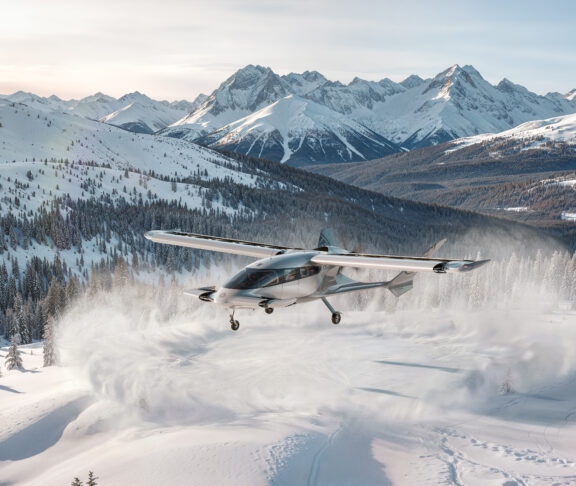
For Canada, these capabilities create significant opportunities. Electric, hydrogen, and hybrid aircraft capable of short takeoff operations, vertical lift, or autonomous cargo delivery can strengthen connectivity between communities, support emergency response, and improve the reliability of supply chains in northern and remote regions. In areas where transportation networks are limited or seasonal, emerging aviation platforms can provide flexible and resilient mobility options.
Many AAM technologies are also inherently dual-use. The same capabilities that improve civilian connectivity can support defence and security operations. Electric and hybrid aircraft can enable cost-efficient logistics in austere environments. Autonomous cargo platforms can transport supplies without placing personnel at risk. Uncrewed systems can support surveillance, search and rescue operations, and environmental monitoring across vast geographic areas.
This convergence between commercial aviation innovation and defence capability is increasingly shaping national strategies. Dual-use technologies are becoming a central focus for our government as it seeks to strengthen resilience while supporting domestic industry. Advanced aviation systems, autonomy software, sensor platforms, and digital air traffic integration all sit at the intersection of civilian mobility and defence readiness.
Canada’s newly released Defence Industrial Strategy reflects this shift. The strategy designates aerospace platforms, avionics, and aircraft communications as one of ten “Sovereign Capability” areas where Canada intends to strengthen domestic industrial capacity. Uncrewed and autonomous systems are also identified as priority areas, reinforcing the role that advanced aerial technologies will play in future operations.
The strategy introduces a series of measures that could accelerate the development of AAM technologies in Canada. Significant increases in defence research and development funding, new commercialization programs and the Drone Innovation Hub through the National Research Council of Canada, and access to Canadian Armed Forces testing environments are expected to help early-stage technologies mature more quickly.
Industrial and Technological Benefits reforms will also strengthen domestic aerospace supply chains by encouraging greater participation from Canadian organizations and emphasizing Canadian intellectual property ownership. For the growing AAM ecosystem, this creates new opportunities for companies working in propulsion systems, autonomy software, advanced materials, simulation, and aircraft systems integration.
Canada’s Arctic and northern regions may also become real-world proving grounds for advanced aviation technologies. Investments in northern operational hubs, logistics infrastructure, and surveillance systems open the door for testing and deploying aircraft capable of operating in low-infrastructure environments. AAM platforms can be well-suited for missions such as Arctic cargo delivery, remote medevac, and aerial monitoring.
Together, these developments signal a broader shift in how Canada approaches aviation and aerospace innovation. Advanced air mobility sits at the intersection of several national priorities: sovereign aerospace capability, autonomous systems, Arctic security, and next-generation transportation.
As this ecosystem evolves, collaboration between industry, government, and research institutions will be essential. Canada already has many of the building blocks required to lead in advancing aviation, but coordination and knowledge sharing will play a critical role in translating innovation into operational capability.
As the federal national industry association for AAM, Canadian Advanced Air Mobility (CAAM) plays an important role in bringing that ecosystem together. CAAM connects the people, projects, and progress shaping the future of AAM in Canada. Those interested in learning more can stay informed through CAAM’s newsletter, attend the quarterly National Federal AAM Town Hall, follow provincial progress through CAAM’s Provincial AAM Roundtables, or join delegation trips that provide direct engagement with global AAM innovators.
To learn more about Canadian Advanced Air Mobility, click here.
