

Heidi Campbell
Senior Designer, Climate Ready, Child-Friendly Public Spaces at
Evergreen
Canada’s school grounds touch every community in the country. Here’s why transforming them may be our most overlooked climate opportunity.
There are over 16,000 of them in communities all across Canada. They are the most significant daily connection that kids have with nature. And yet many school grounds are little more than asphalt and brown grass struggling against a warming climate.
Kids in Canada Are Missing Out on Nature
All of us—but kids and youth especially—need nature. Regular time spent outside is associated with better physical and mental health, better attention spans, a reduction in stress, improved cognitive function and socio-emotional learning in kids. Only about half of Canadian children and just 21% of Canadian youth are meeting recommended physical activity levels. Fresh air and sunlight are in decline while screen time is on the rise.
It’s an equity issue. Not every child has access to resources that ensure experiences in nature.
Climate change is making this worse. Extreme heat and storm intensity are pushing kids indoors. Grey infrastructure accelerates the problem, absorbing and radiating heat instead of cooling it. With Canada warming at twice the global rate, hot days are only going to become more common.
Canada’s Most Underused Climate Asset
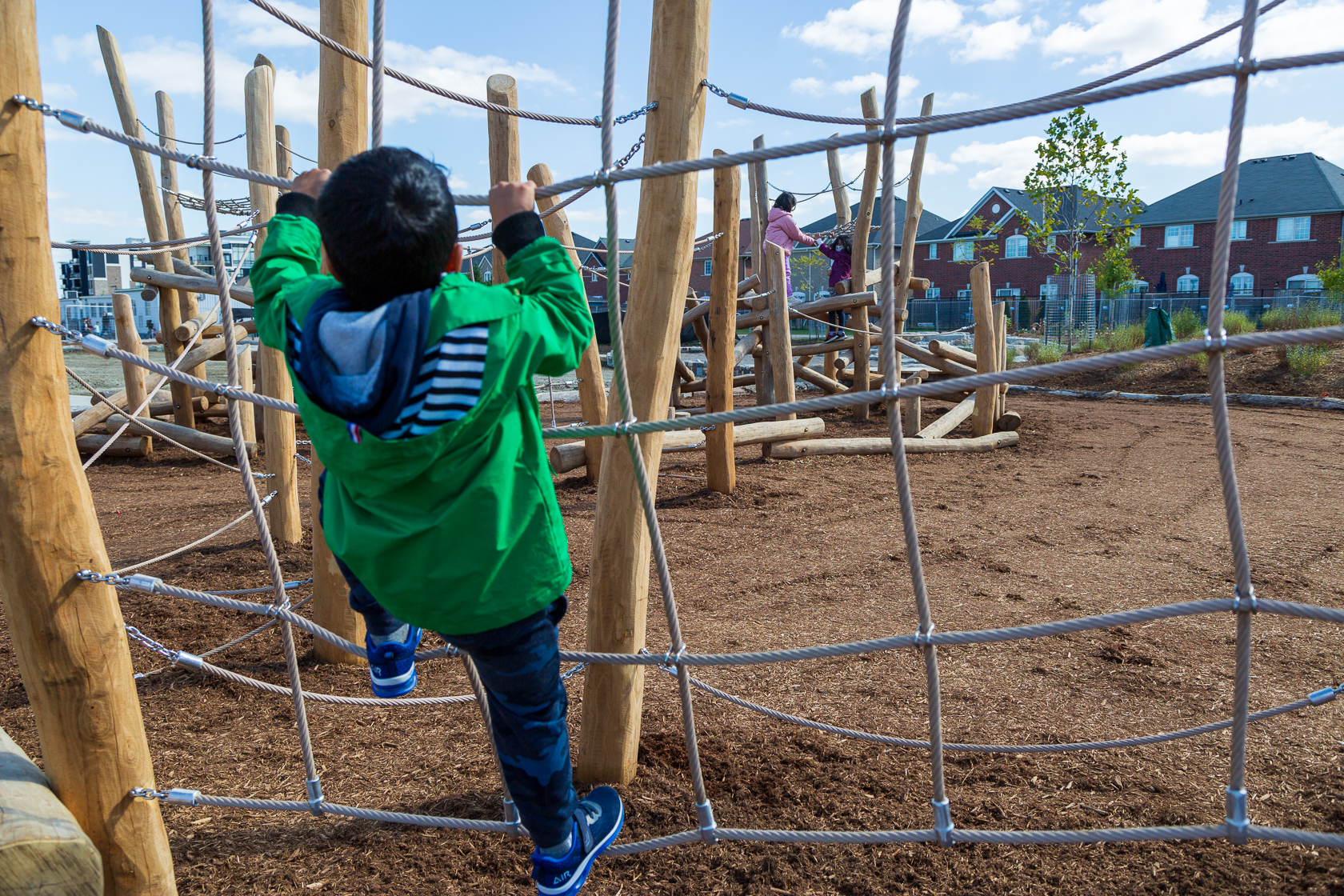
A solution is hiding in plain sight. Canada’s school grounds represent one of the most significant public land holdings in the country — reaching every community, every neighbourhood. When designed well, they can mitigate flooding, cool high temperatures, support biodiversity, and provide the daily access to nature kids need. Right now, most of that potential is hidden under pavement.
Nature-based solutions like this are 50% more cost effective than grey alternatives. Yet only four of Canada’s 700 school boards have a climate action plan. The gap between what school grounds are and what they could be may be Canada’s most overlooked climate opportunity.
A Proven Approach to Climate-Ready Schools
With over 30 years experience leading 6,000+ school ground greening projects across the country, Evergreen Canada is ready to take up this challenge. School grounds designed with communities—not just for them—can solve multiple problems at once.
As Heidi Campbell, Senior Designer, Climate Ready, Child-Friendly Public Spaces at Evergreen, puts it: ” When we reimagine school grounds as parks, learning landscapes, and living ecosystems, they become powerful spaces for climate resilience, deeper learning, and community well-being.”
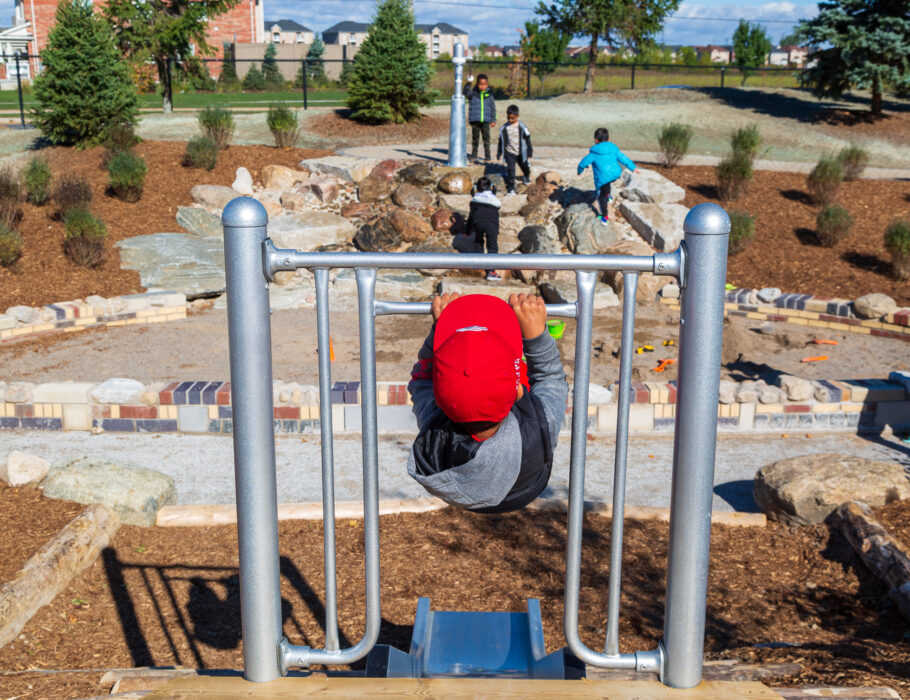
In 2022, Evergreen launched Canada’s first Climate-Ready School at Irma Coulson Public School in Milton, Ontario, transforming 4.5 hectares of barren, flood-prone asphalt into a lush, shaded space designed to absorb rainfall, support biodiversity, and get 1,000 kids outside. Seeing the results, the Halton District School Board has since completed 27 additional school ground greening projects and 5 master plans for new schools. Evergreen’s work has scaled nationally, with three more climate-ready school grounds already in development in Winnipeg, Ottawa, and Toronto.
The work is just beginning. As Irma Coulson Principal, Cheryl Hayles reflected: “It’s an equity issue. Not every child has access to resources that ensure experiences in nature.” Canada’s school grounds can change that — one community at a time.
To learn more about how climate-ready school grounds can benefit your community, visit evergreen.ca.
