Innovating Canada


Kimberly Shearon
Executive Director, Ecojustice
Four young Canadians are suing the Canada Pension Plan Investment Board over alleged climate-risk mismanagement of their pensions. Here’s why it matters.
Food, home insurance, and electricity cost more every year in a rapidly warming world. And yet, Canadian governments and institutions continue to bankroll climate chaos, worsening cost-of-living pressures for millions of people. As climate impacts grow in intensity and frequency, they could bring about economic collapse, threatening retirement savings in the long term.
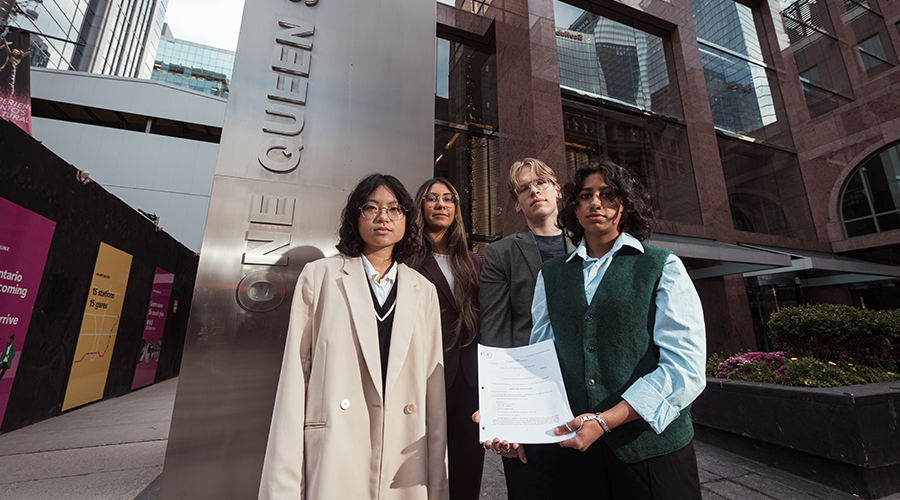
That’s why Aliya, Chloe, Rav, and Travis, represented by Ecojustice, Canada’s largest environmental law charity, are suing the Canada Pension Plan Investment Board (CPPIB).
Taking on the world’s sixth largest pension fund
Most working Canadians contribute to the Canada Pension Plan (CPP), which manages more than $700 billion. How this is invested affects the retirements of millions of people and influences the broader economy.
CPPIB disclosed in 2024 that 3.5 per cent of its portfolio — $22.6 billion at the time — was invested in fossil fuels. In 2025, it invested a further $6 billion in the industry.
The case argues that continued investment in fossil fuel expansion exposes our pensions to financial risk as climate impacts intensify and markets shift toward renewable alternatives.
We think ignoring or severely underestimating climate-related financial risks is irresponsible to each of the 22 million people counting on the CPP for retirement, especially those who plan to retire after 2050 and could be left with an inadequately funded pension. That could mean smaller retirement benefits, significantly higher contribution rates, or both.
Our clients want CPPIB to go further to shield Canadians’ retirement funds from such clear risks.

Why this matters
There’s an obscene irony in paying twice to suffer the impacts of climate change — first through public dollars spent propping up a fossil fuel industry fighting for relevance, then again every time we pay more to rebuild infrastructure damaged by extreme weather or when poor harvests cause food prices to rise.
Investment decisions today must serve the best interests of all contributors.
This case has already garnered international attention. Pension funds worldwide are watching to see how Canada’s courts will clarify their legal obligation to manage climate risk.
Why we do this work
Canada is a democracy where the rule of law and the role of the courts still matter. This gives Canadians like Aliya, Chloe, Rav, and Travis a powerful avenue to demand accountability from even the most impenetrable institutions.
This case is just one example. Ecojustice uses strategic litigation and law reform efforts to defend the environment and hold our governments and institutions to account for serving the public interest. We’re non-partisan, 100 per cent donor-funded, and represent our clients free of charge in pursuit of justice for the environment and communities across Canada.