Innovating Canada

This Canadian not-for-profit is exploring innovation as sustainability, finding unique ways to further Canada’s agriculture industry and drive continued climate-friendly progress.
While necessary to our survival, the agriculture industry is a sector facing imminent threat from global issues like climate change. The not-for-profit Ag-West Bio has been actively advancing bio-based solutions for over 30 years, investing in businesses that are developing agri-food innovation in Saskatchewan and beyond.
Started in 1989, Prairie-based Ag-West Bio supports companies that are commercializing research specifically within the agri-food and bioscience industry. The organization’s investments and initiatives are broad, focusing on companies that apply novel approaches to agricultural and food-related challenges.
“I wouldn’t say there are environmental issues facing the agriculture industry so much as there are environmental issues facing everyone,” says Noelle Chorney, Communications Director at Ag-West Bio. “The agriculture and ag-bioscience industry can help on many levels, from food security to waste management, climate-smart solutions, and improved soil health.”
Innovation reflects sustainability
The very concept of innovation, particularly as it relates to Ag-West Bio and its investments, reflects core concepts of sustainability: increasing efficiencies, reducing waste, and lowering emissions. “We want to make more with less. All the principles of sustainability reflect what innovation is leading toward,” Chorney says.
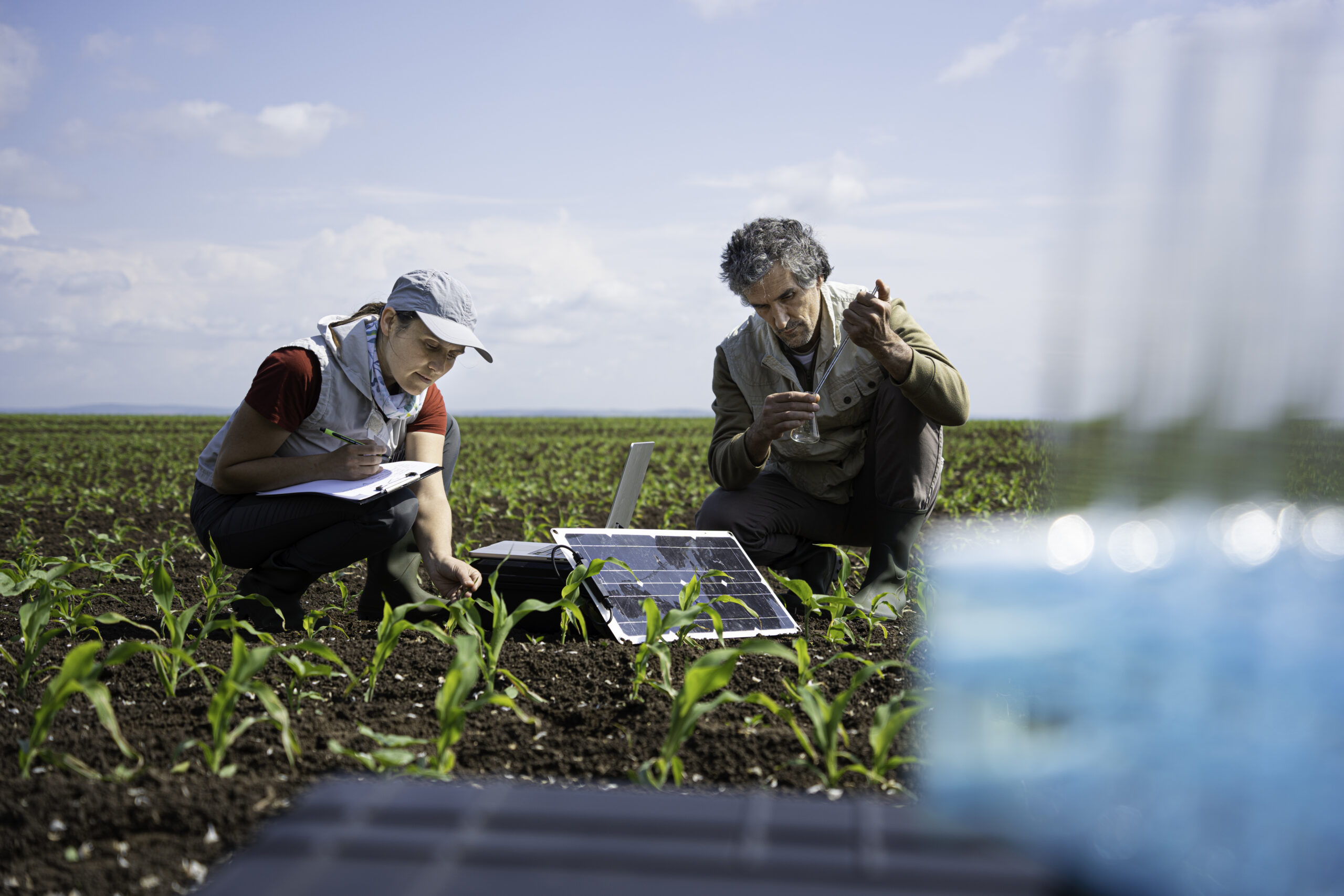
This idea is reflected in the types of investments Ag-West Bio makes and the specific challenges it encourages organizations to confront. Precision agriculture is one such example. It’s a broad concept that reflects how the industry can glean more information on specific land, down to a square centimetre of a field.
As part of precision agriculture, biological soil health explores how plants can play a role in sustainable living. “Healthy soil makes healthy plants and more resilient crops,” explains Chorney. Soil is a living ecosystem, and understanding soil health is necessary to maintain nutrient uptake and lower greenhouse gas emissions. Ag-West Bio is working with organizations to develop ways farmers can enhance soil health by adding microbes and biostimulants, thereby improving plant health with fewer negative outputs.
Similarly, genomics tools are allowing the industry to identify molecular markers in plant genetics that can help improve water-use efficiency or drought resistance. By identifying the specific genomic codes, traditional breeders can select crops faster and produce offspring with ideal traits. “Diseases and pests are constantly adapting. We need crop varieties that are competitive against these adapting threats,” says Chorney.
Investing in alternatives
In order to confront climate challenges, it’s important to go beyond farming and find sustainable food sources. Circular bioeconomy involves ensuring all inputs and outputs are used as efficiently as possible, essentially turning waste products into usable outputs. Similarly, climate-smart food and protein innovation is critical to producing next-generation food technologies that meet food demands while lessening emission intensity.
Technologies like precision fermentation focus on alternative protein sources like mushrooms, developing protein ingredients consumers are comfortable with but with lower resource requirements than conventional sources. The result is meat-like protein molecules made from plants.
“Innovation is always moving us in the direction of higher efficiency, fewer inputs, and less impact on the environment,” notes Chorney. The agriculture industry may be at the forefront of climate change, but it’s tackling these issues head-on with the help of Ag-West Bio and a broad commitment to driving agri-food innovation for Canadians.
To learn more about Ag-West Bio and its investments and initiatives to build a more sustainable future for Canadians, visit agwest.sk.ca.