
Eroding trust, rising isolation, AI and climate impacts are some of the future scenarios that business, policy leaders should prepare for
As the headlines make clear from one day to the next, the pace of change is not slowing down. For business leaders, policy-makers, and worker advocates, a shared challenge is anticipating what may be in store in the world of work.
For workplace health and safety leaders, figuring out what’s ahead is not an idle exercise. The implications for worker protection imbue this question with a sense of urgency.
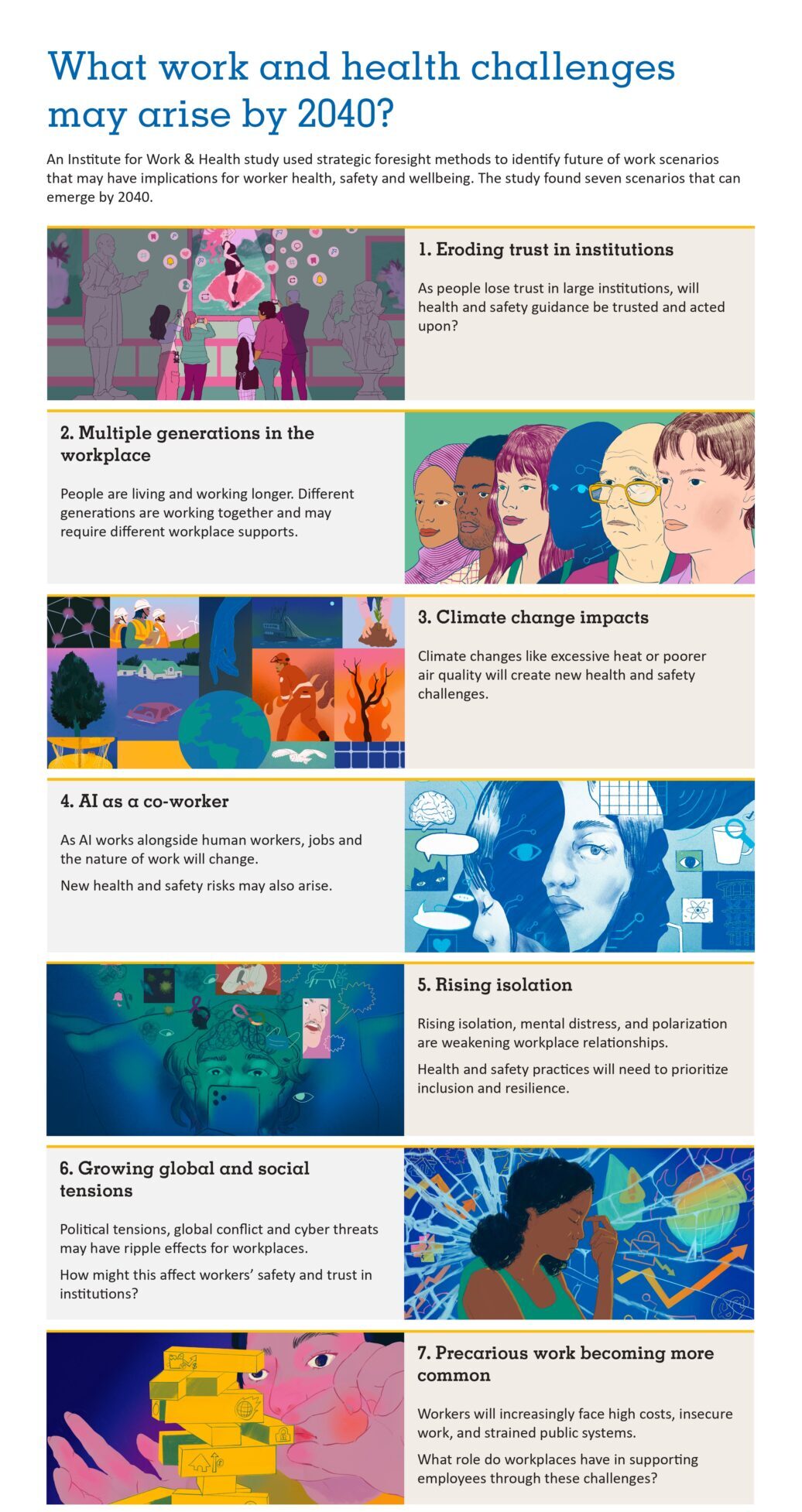
That was why the Toronto-based Institute for Work & Health recently led a large team of work and health researchers from across Canada and European countries on a foresight report. Titled “Work and Health in 2040,” the report sets out seven potential future scenarios that workplaces need to prepare for.
1. Eroding trust in institutions
Public confidence in institutions, experts, and systems is eroding. Instead, authority is shifting toward influencers and personalities who share one’s personal values. New challenges emerge around how health and safety messages are received.
2. Longer lifespans and differences across generations
People are living longer and retiring later. The comingling of five generations at work—of Baby Boomers, Gen X, Millennials, Gen Z, and Gen Alpha—means a new mix of values, communication styles, and workplace expectations.
3. Intensified climate impacts
The accelerating climate crisis is exposing workers to new physical risks. Some industries are being reshaped. New legal and ethical norms may emerge to protect workers from climate-related harms.
4. AI as a co-worker
As artificial intelligence (AI) becomes more widespread, new questions are raised about the implications for worker health, safety, wellbeing, equity, justice, job security—and even what it means to be human at work.
5. Rising isolation
Growing social disconnection, declining mental health, and rising polarization across society are changing how workers relate to one another. Inclusion, resilience, and belonging become priorities for many, while spawning resistance from others.
Figuring out what’s ahead is not an idle exercise. The implications for worker protection give this question a sense of urgency.
6. Growing global and social tensions
Rising political tensions, global conflict, and cyber threats are extending warfare into economic, digital, and environmental realms. The potential for volatility can directly affect worker safety, wellbeing, and trust in institutions.
7. Precarious work becoming more common
Rising costs, unstable jobs, and strained public services accompany periods of economic, social, and technological change. As the world shifts, precariousness—including housing or food insecurity—will continue to be a defining challenge for workers, employers, and health systems.
By identifying these possible drivers of change, we offer a foundation for business leaders, health and safety policy-makers, and researchers to start planning for future challenges. Our report also lays out important questions that arise from these scenarios. We hope to spur productive conversations from the boardrooms to the shop floor about what’s in store and what it means for the health of workers.
Read the report here.