



Tyler Groeneveld
CEO, Protein Industries Canada
We Grow It Here. So Why Are We Missing the Middle?
Around the world, countries are competing to capture more value from food production. They’re investing in processing facilities, ingredient manufacturing plants, and the infrastructure needed to turn raw crops into high-value products. The goal is simple: keep more of the economic value, jobs, and innovation at home.
Canada should be well-positioned to lead. We produce crops that are of the highest quality in the world and have a strong agriculture sector. But despite those advantages, we are not keeping pace with competitors who are moving faster to capture what comes next.
We have the ingredients. What’s missing is how we put them together.
Food production is a continuum—from farm, to ingredients to the products we buy. Canada excels at the beginning and participates at the end. But too often, the middle step—transforming crops into ingredients—is happening somewhere else.
The step where value is built—and too often lost
Canada’s agricultural legacy is rooted in abundant resources and steady exports. However, exporting raw crops means also exporting the value added by ingredient manufacturing—turning crops into protein, starch, fibre, and oil for food production. When this processing happens abroad, Canada misses higher-value opportunities, fewer facilities are built locally, supply chains aren’t anchored here, and Canadian companies struggle to scale.
From Canadian fields to global factories—and back again
You can see the effects in everyday life.
Crops grown in Canada—peas, oats, canola—are often shipped abroad for processing. There, they’re transformed into food ingredients, then sold into global supply chains. Many of those same ingredients eventually make their way back into Canada, embedded in the foods we buy every day.
From pasta and cereals to plant-based staples, the value created in that middle step is often captured elsewhere.
In effect, we export raw potential—and import it back as finished value.
That’s not a broken system—but it is an incomplete one. And in a more competitive global environment, it leaves Canada at a disadvantage.
More than one product, more than one opportunity
The difference that middle step makes is significant.
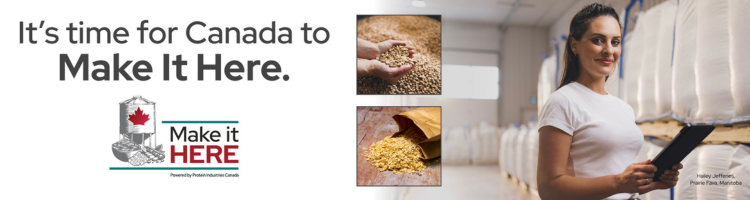
When a raw crop is exported, it is sold once. But when that same crop is processed into ingredients, it can generate multiple products and multiple revenue streams.
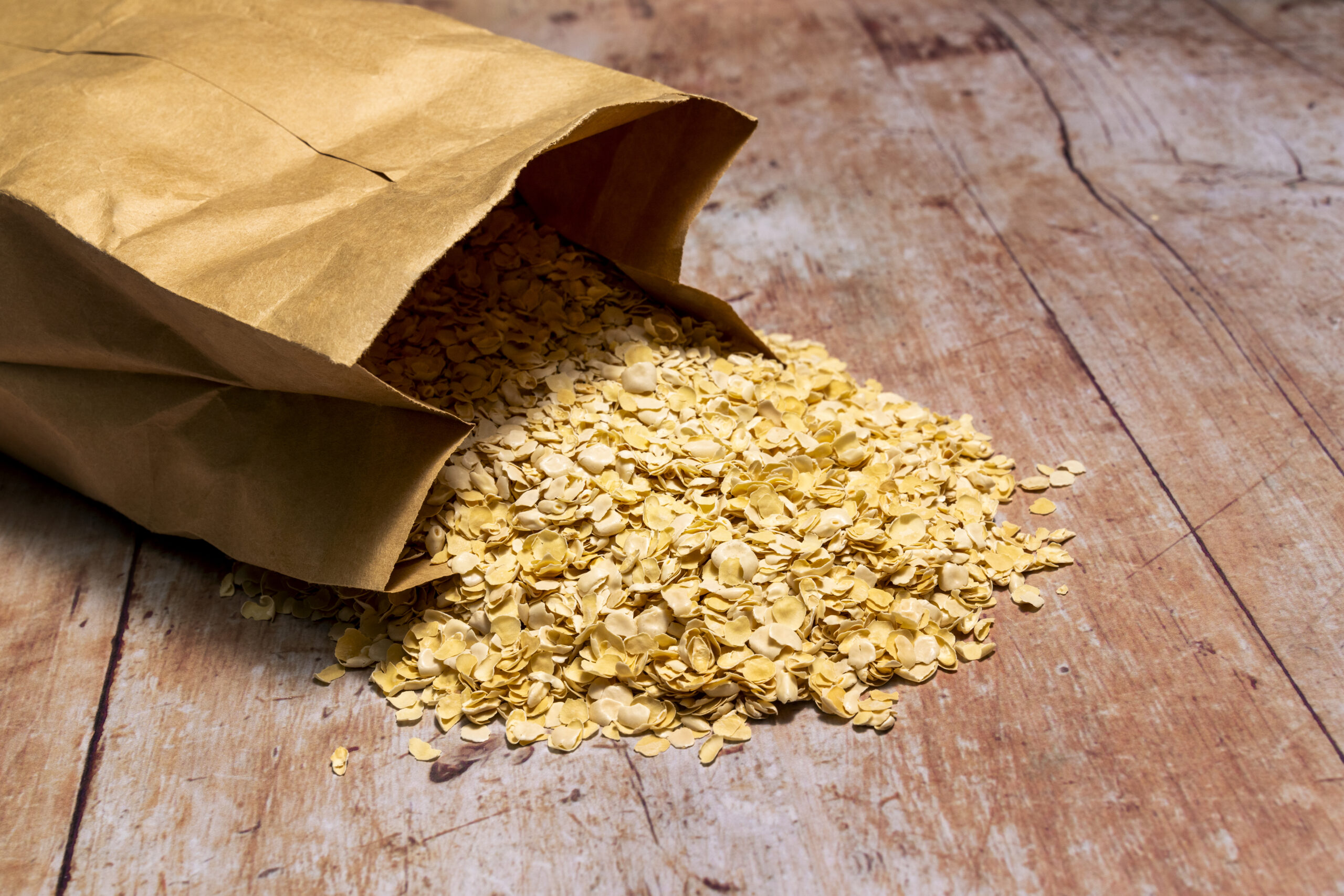
Take a tonne of peas. Sold as a commodity, it earns a single market price. But when processed, it can be separated into protein, starch, and fibre—each with its own market, each adding incremental value. The result can be up to ten times the economic return from the same harvest.
Same crop. Same starting point. A completely different outcome.
Processing more of our crops here at home could add $25 billion to Canada’s GDP and create 17,000 jobs. But without that middle step, much of that growth will continue to happen elsewhere.
A race for what happens in between
This gap is becoming more important, not less.
Global demand for high-quality food ingredients is rising, and countries are moving quickly to secure their position in the value chain. The infrastructure that enables processing capacity—processing plants, manufacturing facilities, and supply networks—is being built now.
Canada has the advantage of strong primary agriculture and an established food sector. But without closing the gap in between—and addressing the barriers that slow investment, from infrastructure to regulation—we risk falling further behind countries that are treating this as a strategic priority.
Connecting the system we already have
Addressing the missing middle isn’t about replacing what Canada already does well—it’s about connecting it.
Farmers will always be the foundation of Canada’s agricultural success. Food manufacturers will always play a critical role in delivering products to consumers. The opportunity is to link those strengths more effectively by building out the step that sits between them.
That means creating the conditions for ingredient manufacturing to scale in Canada—through better access to capital, stronger infrastructure, and a regulatory environment that enables, rather than slows, growth.
From potential to performance
Canada has everything it needs to succeed in a changing global food system—high-quality crops, a strong innovation base, and a reputation as a reliable partner.
But having the inputs is no longer enough.
The countries that capture the most value will be the ones that build complete systems—where production, processing, and manufacturing all work together.
Canada has the beginning and the end of that system.
Now it needs to fill in the middle—and move from potential to performance. Because if we don’t, we won’t continue exporting crops—we’ll continue exporting the opportunity that comes with them.
Visit proteinindustriescanada.ca/makeithere to learn more.
