

Rafik Goubran
Vice-President (Research, Innovation and International), Carleton University
International research partnerships are driving innovation, advancing global knowledge, and helping universities address shared challenges across borders.
Responding to today’s societal needs while anticipating future challenges, Carleton University is a research-intensive institution whose international research spans four areas of strength: heritage conservation, quantum technologies, refugees and migration, and African studies.
Advancing innovation through international partnerships
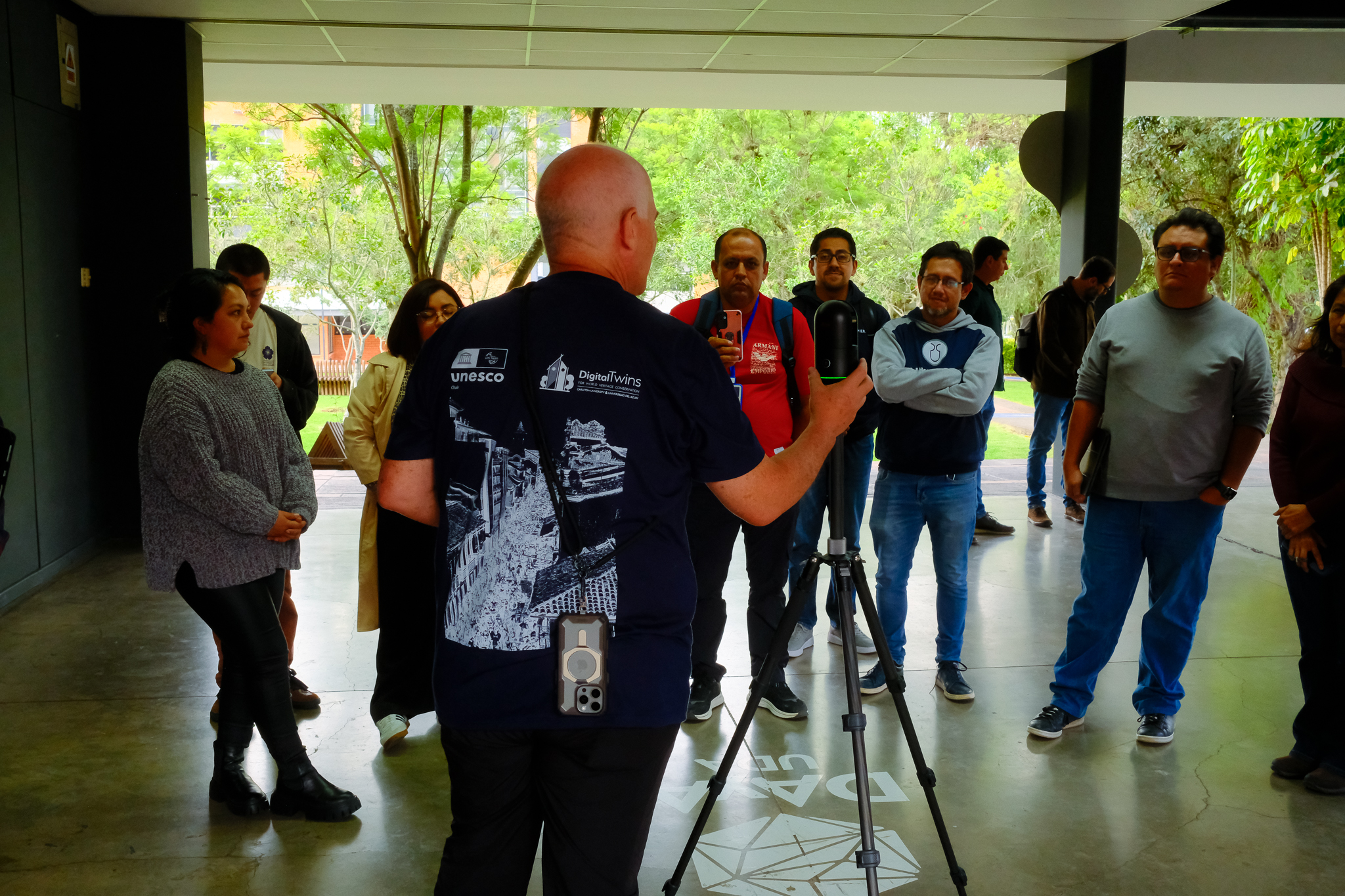
Carleton researcher Mario Santana Quintero was recently awarded Canada’s first UNESCO Chair supporting the World Heritage Convention. In the context of climate change, his research under the Chair has a dual goal: harnessing digital innovation to protect heritage assets and advance global sustainability goals. Based at the Carleton Immersive Media Studio, Quintero is co-leading an international team of researchers at 16 institutions, spanning 6 continents. Incorporating methods from engineering, design, and architecture, an emerging approach to creating digital twins is being used to preserve global heritage assets using dynamic 3D virtual replicas to integrate diverse data streams.
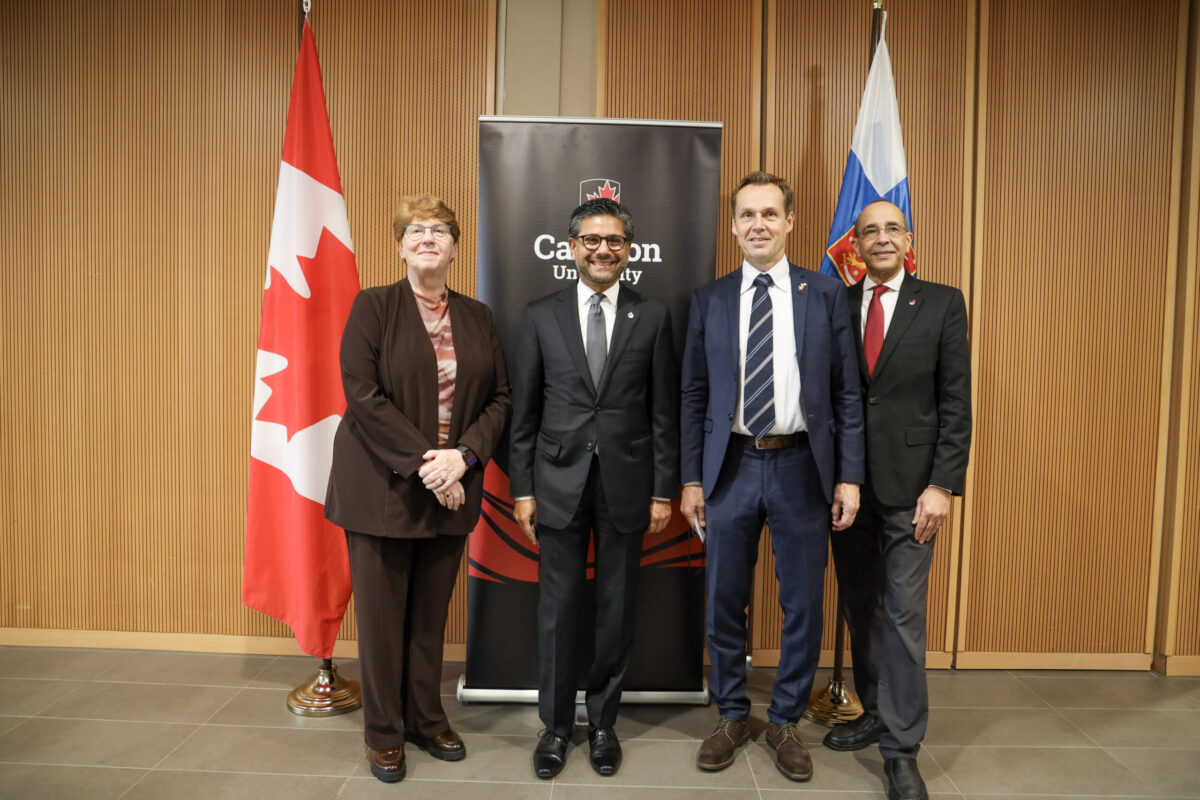
Quantum research is happening in over 30 different Carleton labs, with more than 100 researchers from diverse disciplines. To fuel this work, Canada and Finland launched a new strategic quantum partnership called the Northern Entanglement Partnership at Carleton. Quantum technologies will transform how we solve challenges, from ultra-secure communications to revolutionary advances in materials and artificial intelligence (AI), and Carleton is at the forefront of this transformation. The Canadian-Finnish partnership brings together researchers, government representatives, and industry leaders from both countries to advance strategic collaboration.
Accelerating knowledge gain
The annual ETSI/IQC Quantum Safe Cryptography Conference is being held June 16-18 at Carleton University, and will showcase both new developments from industry and government and cutting-edge potential solutions coming out of the most recent research.
Thanks to our growing partnerships, we can create solutions that shape a more sustainable and prosperous future.
In addition, the Ericsson-Carleton University Partnership for Research and Leadership in Wireless Networks is a collaborative effort that is driving innovation, training skilled workers and building more reliable, secure technology for the future of 5G wireless communications.

Global research shaping policy, equity, and practice
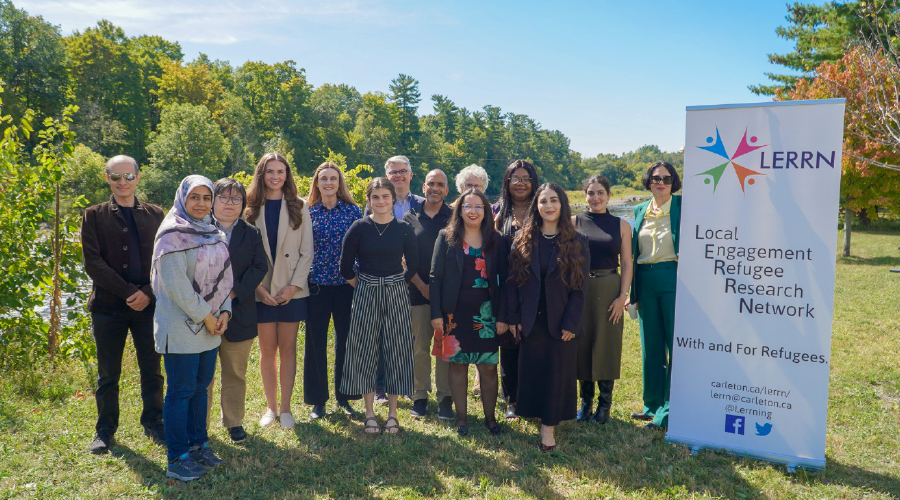
Giving voice to those affected by forced migration and displacement is critical to inform more effective research, policy, and practice. James Milner, Professor of Political Science at Carleton, is leading a global group of partners that has been awarded $2.5 million in funding to support the Local Engagement Refugee Research Network (LERRN), which supports meaningful participation by those who have been displaced. This shifting role positions refugees not as subjects of research, but as active participants in decision-making processes, ensuring they’re at the table and that they collectively decide which research projects benefit them. To date, more than 250 advocates with lived experience of displacement have received training to participate in United Nations-led meetings.
Deepening academic cooperation between Canadian and South African researchers is getting a boost with a joint seed-funding initiative that’s expected to launch this year, thanks to a formal agreement between South Africa’s National Research Foundation and Canada’s Social Sciences and Humanities Research Council. This agreement was signed at an event by the South Africa-Canada Universities Network—a network Carleton helped establish to support collaborative research, training, and dialogue in areas such as reconciliation, health, environmental sustainability, AI, and inclusive economic development.
The challenges we face locally and globally don’t stop at national borders, and neither do the solutions. It’s this idea that fuels Carleton and its dedicated interdisciplinary community of researchers.
“Carleton’s researchers are internationally recognized for their collaborations across Canada and the globe,” said Rafik Goubran, Vice-President (Research, Innovation and International). “Thanks to our growing partnerships, we can create solutions that shape a more sustainable and prosperous future.”
Learn how Carleton University’s research is making a global impact at research.carleton.ca.
